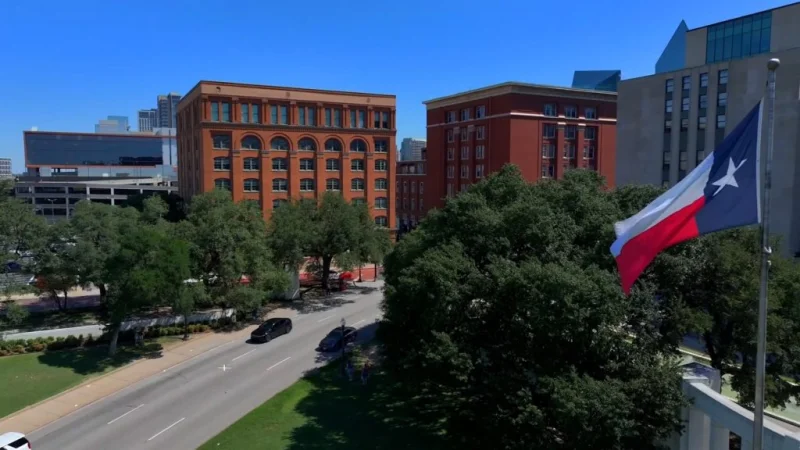
At The Sixth Floor Museum at Dealey Plaza, the Jfk assassination is still being told as a live question, not a closed chapter. The former book depository in downtown Dallas is now the place where visitors are met with the story of President John F. Kennedy’s killing on November 22, 1963, and with the questions that have never really gone away.
That matters now because the museum is trying to reach people who may not have any working knowledge of what happened in Dealey Plaza. Its message is plain: many younger generations arrive with no clear idea of the event, and the museum sees its role as giving them a way into Kennedy’s life, death and legacy without pretending the history is simple.

In that effort, the museum does not just display the basics. It asks the kinds of questions that still shape the debate around the assassination and treats the site as both history and evidence. Investigators determined that shots were fired from the sixth floor of the building by Lee Harvey Oswald, but the questions around motive, interpretation and certainty still hang over the place where Kennedy was shot and killed in his motorcade crossing Dealey Plaza in downtown Dallas.
The museum also uses a special exhibition on one floor up to pull visitors back into the day’s first draft of history. It follows four local newspaper reporters who worked on the story in November 1963, including Darwin Payne, who was 26 years old and on the rewrite desk at the Dallas Times Herald in November 1963 before he was quickly sent into the streets after the assassination. He was the first to talk to Abraham Zapruder, the clothing manufacturer who famously filmed the assassination, a reminder that the story was built in real time by people who were still trying to understand it.
That is also where the friction sits. Some people will never accept the official U.S. government determination, and the museum does not try to flatten that argument away. Instead, it describes its job as giving audiences the tools to navigate an interpretive minefield of history and culture, and it calls the site what it is: a murder mystery, a CSI crime scene. The result is a place that preserves memory while also acknowledging that the final argument over the Jfk assassination is still not settled for everyone who walks through the door.