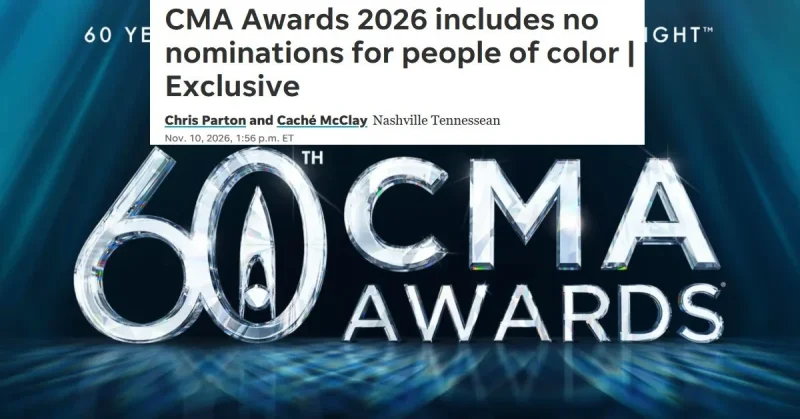
Sammy Kershaw accepted the CMA’s apology and was invited to attend after a red carpet dispute ahead of the 2026 CMA Awards, but the bigger story is what happened when the nominations came out: not a single Black or Brown artist, songwriter or producer made the list. It is the first time that has happened since 2017.
That absence is why Kershaw’s name is being searched now. His clash with the organization is only part of the picture; the other part is the nominations slate itself, which landed at a moment when the CMA is already under scrutiny over who gets seen, heard and rewarded inside country music.
The gap is stark enough to measure. The 2026 nominations were decided by 7,000 voting members, and that process produced no nominations for Black or Brown talent in any of the three categories named. The last time the awards went without any Black or Brown nominee in those spots was 2017, making this year’s result an eight-year break from even limited representation.

There is also a reason the organization cannot simply point to one person or one office and call the matter closed. The CMA can launch diversity initiatives and do advocacy work, and it has seen more nominations for artists of color since 2017, but the final vote sits with those 7,000 members. That is the friction at the center of the story: policy can change at the top, while the ballot still reflects the choices of voters below.
Chris Parton and Caché McClay of The Tennessean interviewed multiple sources, including Rissi Palmer, and reached out to incoming CMA CEO Brittany Schaffer for comment. The reporting frames the Kershaw dispute as an example of how the country music industry treats certain cohorts of performers, and Kershaw himself said the episode would be cited for years as proof of the industry’s callous nature toward some artists.
Black and Brown listeners are the fastest-rising demographic of country’s new fans, which makes the absence of nominees harder to dismiss as a temporary blip. The question now is not whether the CMA can make diversity a talking point; it is whether a voting system built around 7,000 members will ever produce a nominations slate that reflects the audience country music says it wants to keep.