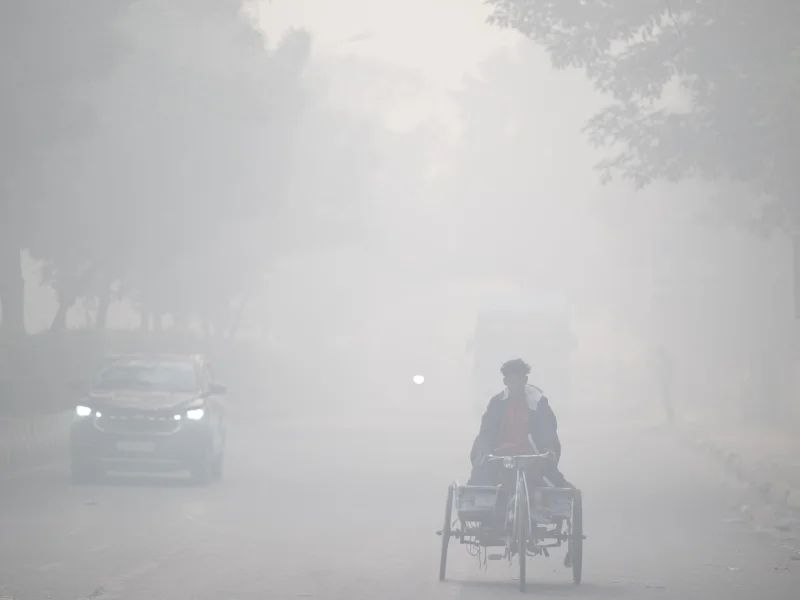
Air quality in parts of New Delhi jumped to more than 58 times the World Health Organization's recommended daily limit on Monday, after Diwali fireworks lit up the city overnight. In Mandir Marg, PM 2.5 levels hit 879 micrograms per cubic metre in the early hours, a reading that was nearly 59 times the WHO maximum.
For Kanwar Singh, the numbers matched what the air felt like. A short motorbike ride through the city left him coated in toxic dust, a blunt reminder that the spike was not abstract for the more than 30 million people who live in New Delhi.

The reading came about eight hours after the peak of the bursting fireworks, making clear how quickly the holiday celebration deepened an already dangerous smog problem. Delhi's winter air is driven by a mix of vehicles, biomass burning such as farm stubble fires, industry and secondary particles, and the latest surge pushed the city further into the range that health experts have warned can be deadly over time.
This month, the Supreme Court allowed the limited use of so-called green firecrackers during Diwali, but restrictions on firecrackers are routinely flouted and the city reverberated with explosions anyway. Authorities have also imposed traffic and construction restrictions in recent weeks to curb smog, yet those measures did not prevent the overnight surge in pollution.
That gap is the story now. Delhi can announce limits, and the Supreme Court can narrow them, but the air still turns toxic when fireworks burst across the city. With a 2024 study in The Lancet Planetary Health linking 3.8 million deaths in India between 2009 and 2019 to air pollution, the question is no longer whether the smoke matters. It is whether the rules around Diwali will be enforced tightly enough to matter at all.