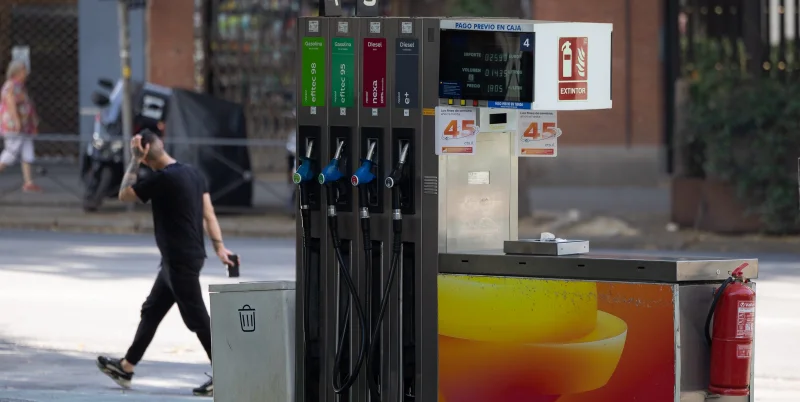
The diesel discount the Government approved on 29 September was still not reaching every pump three weeks later, and on 22 October the OCU said 34% of gas stations had not lowered prices enough. The consumer group said the fuel tax cut, meant to trim 15 cents per liter in October, was still being passed on unevenly to drivers buying gasoline without lead and diesel.
The scale of the gap matters because the OCU said the measure should have produced an approximate price drop of 18.1 cents per liter for consumers once VAT was applied. It also said the final expected rebate should reach 22 cents per liter after the extra decline in fuel market prices since 1 October is added in, which makes the shortfall easier to measure and harder to dismiss as a timing issue.

That delay was visible from the start. At 14:00 on 1 October, the OCU said the discount did not reach 15 cents in 24% of stations, while 28% had not even reported price changes. By 8 October, Repsol, BP, Moeve, Galp, Shell, Petronor, Campsa and Petrocat had practically all updated prices, and the average discount in that network had risen to 17.9 cents per liter. In other words, the big brands moved quickly, while the problem lingered elsewhere.
The OCU said the most common irregularities were concentrated among low cost chains, and it said major brands reacted much faster than those operators. On 22 October, the contrast was still clear: the real discount was only 12 cents per liter at Beroil, 14 cents at GMOil, and about 15 cents at Eroski and many other low cost stations. By comparison, BonÀrea showed a discount of 24 cents per liter, BP 22 cents, Repsol a little more than 21 cents, Campsa, Tamoil and Petronor around 21 cents, and Moeve, Alcampo and Carrefour about 20 cents.
The watchdog called the results very worrying, saying they showed a troubling lack of application of the tax cut and that a measure financed with public resources to ease household spending had not reached all consumers fully or immediately. The pattern fits a familiar one in fuel pricing: prices can rise fast, but they often fall more slowly, and on this occasion the gap between the policy and the pump was still wide enough on 22 October to leave the central question unresolved — whether the savings were being kept by retailers, delayed in the system, or passed on only after the pressure had already built.