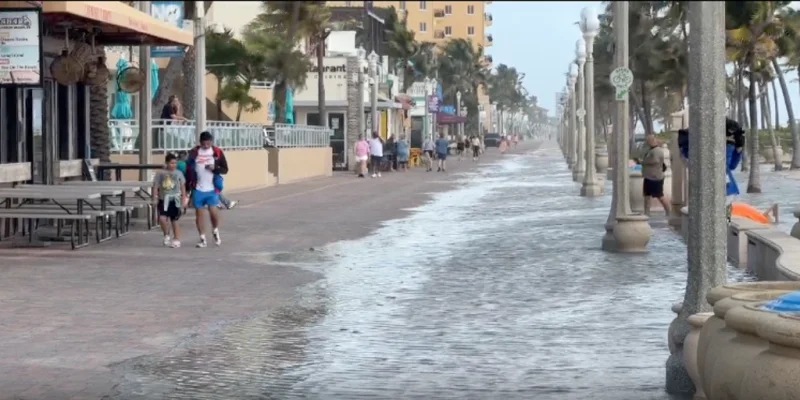
King tides flooded parts of South Florida on Monday, Oct. 26, 2026, and in one of the hardest-hit spots the water climbed 2.25 feet above normally dry ground. In South Port Everglades, that marked a new high above the record set by Hurricane Nicole in 2022.
The flooding also pushed into the top five on record Monday in Virginia Key, Port Canaveral and Lake Worth, a sign of how wide the event had become by the time coastal streets were already seeing water. The peak is expected to keep going through Wednesday across the Southeast coast, with Coastal Flood Warnings stretching across parts of South Florida, Georgia and the South Carolina Lowcountry.

Brandy Campbell reported from Hollywood, Florida, where strong winds, more than 2 inches of rain and king tides were building a flood threat through midweek. The scene was especially unnerving because the water was rising on clear, sunny days with no storm in sight, even as the tropical setup was helping feed the problem from another direction.
An upper-level low near Cuba, working with high pressure, is drawing deep tropical moisture across the peninsula and adding rain to tides already being driven higher by persistent northerly to northeasterly winds. That combination can slow drainage, push saltwater back through storm drains and onto streets in Miami Beach, Brickell, Fort Lauderdale and the Florida Keys, while also making it harder for water to move away from the St. Johns River around Jacksonville.
By midweek, the Southeast coast is still in the final stretch of the fall King Tide event, with roughly 24 to 48 hours left in the peak period. For coastal communities, that means the question is not whether the tide will ease, but how much more water will be forced inland before it does.