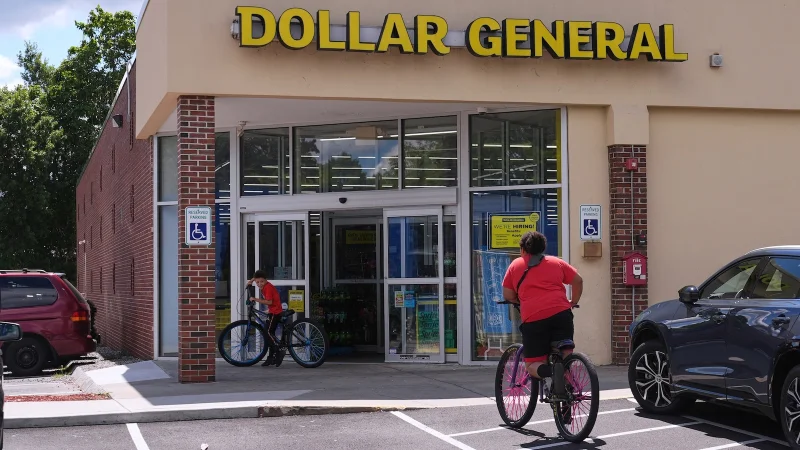
The Federal Trade Commission and 20 states sued Dollar General on Thursday, accusing the discount retailer of long-running deceptive pricing practices that allegedly left shoppers paying more at the register than the prices posted on shelves and in advertisements.
The complaint was filed in the U.S. District Court for the Middle District of Tennessee, putting one of the country’s biggest bargain chains under a new wave of state and federal pressure. Dollar General, based in Goodlettsville, Tennessee, serves millions of American consumers and has built its business around low prices that are supposed to be easy to find and easy to trust.
The FTC said the company failed to fix the problem even though it had extensive corporate knowledge of it. Christopher Mufarrige, who leads the FTC’s Bureau of Consumer Protection, said Dollar General had betrayed the trust of millions of American consumers and caused significant financial harm to communities and shoppers who are already struggling to make their paychecks last. That accusation gives the lawsuit its force: this is not just about a few disputed price tags, but about whether a retailer with a national footprint let a basic checkout problem persist long enough to become a pattern.

The case also shows why the filing landed so hard today. Twenty states joined the complaint, a signal that the alleged conduct was seen as more than a local dispute and more than an isolated mistake. The states are Alabama, Arizona, Arkansas, California, Connecticut, Florida, Illinois, Iowa, Kansas, Louisiana, Michigan, Mississippi, Nebraska, New Jersey, North Carolina, Ohio, Oklahoma, Tennessee, Utah and Wisconsin.
What the complaint does not yet settle is how Dollar General will answer the claim that the problem continued despite corporate awareness. The company did not immediately return a request for comment from The, leaving the lawsuit’s central factual fight for court: whether the pricing gaps were a long-running system failure that went unchecked, or something the company will argue was handled differently than regulators say.
For shoppers, the case turns on a simple promise that sits at the center of bargain retail: the price on the shelf should be the price at the register. If regulators can prove the gap was widespread and known inside the company, the lawsuit could become a significant test of how far federal and state enforcers are willing to go when they believe a retailer’s checkout system has crossed the line from mistake to practice.