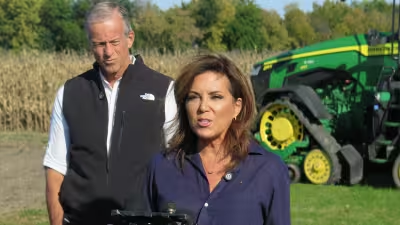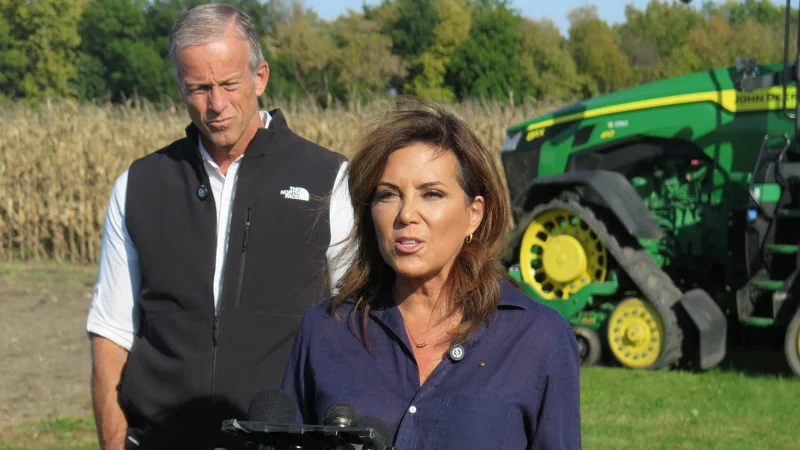
Michele Tafoya is running for the U.S. Senate seat in Minnesota, turning a long broadcasting career into a direct challenge for one of the few Democratic-held seats Republicans hope to flip. Her opponent will be Minnesota Lt. Gov. Peggy Flannagan, and the race now has a clear shape: a former NFL sideline reporter against a statewide officeholder trying to hold the seat Tina Smith is leaving behind.
Tafoya is not an unknown name in Minnesota. She moved there in the early 1990s to work at KFAN in Minneapolis after launching her sports career in Los Angeles, later moved to CBS, and spent years on the biggest stages in American sports. She covered five Super Bowls, the NBA and the Olympics, won five Emmys, and ended her broadcast run during Super Bowl LVI in 2022 before announcing, less than 12 hours later, that she would co-chair Kendall Qualls's campaign for Minnesota governor.

That switch matters because Tafoya built her public identity inside a profession that rewards caution. She has said she always had strong political views, but made a point of keeping them out of her work, and in 2022 she said she was not as free to be as vocal about world events that she cared about. The line between broadcaster and activist was already thinner than it looked. In 2015, she told Sports Illustrated that she supported efforts to curb climate change, even as she regularly promoted conservative outlets on social media, a mix that does not sit neatly with the GOP mainstream.
Flannagan enters with the policy profile that has helped define the left side of the race, including support for Medicare for All and abolishing Immigration and Customs Enforcement. Tafoya, by contrast, is trying to translate a sports audience into a Senate coalition, and the campaign has already shown some movement: she has steadily chipped away at Flannagan's lead in polls since the primary. For Republicans, that is enough to make Minnesota one of the few offensive opportunities in a Senate map they mostly have to defend.
The next test is simple. If Tafoya keeps narrowing the gap, the race becomes less about novelty and more about whether a well-known newcomer can close on a stronger partisan brand before November. If she cannot, the campaign becomes a reminder that name recognition can start a race, but it does not finish one.