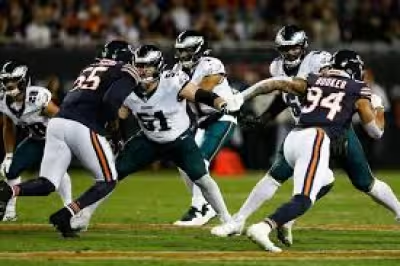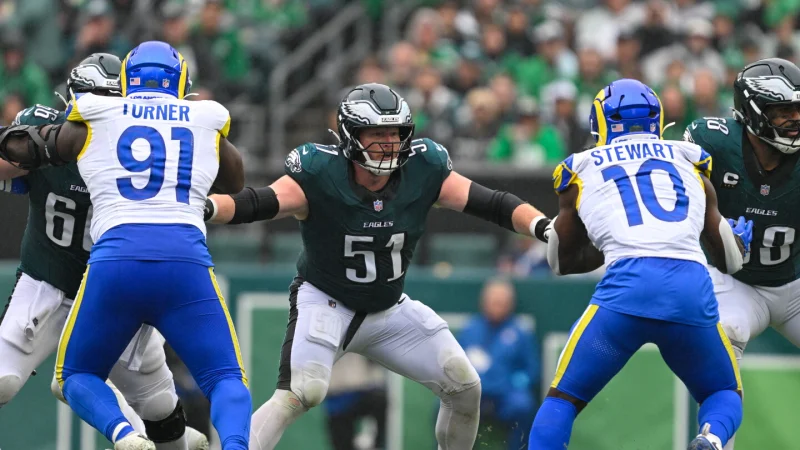
The Eagles traded center Cam Jurgens to the Ravens on October 7, 2026, sending him and a 2027 seventh-round pick to Baltimore in exchange for a 2028 second-round selection and a 2027 fifth-rounder. The move came as the Eagles continued a major overhaul up front, turning a player they had extended only months earlier into future draft capital.
The timing made the deal harder to ignore. Jurgens was part of the Eagles' championship-winning team in 2024 and made his first Pro Bowl that same year, then signed a four-year, $68 million extension in April 2025. Moving him now, rather than keeping him as a long-term piece, signals that the Eagles chose flexibility over continuity even after committing significant money to him.

Adam Schefter of reported the trade, and the pick package gives each side a clear objective. The Ravens add a center without giving up a premium current selection, while the Eagles collect a second-rounder and a fifth-rounder for a player they had just paid like a cornerstone. That kind of exchange is unusual because it takes a contract designed to lock in a starter and flips it into draft value before the deal has even settled in.
The broader backdrop is a line in transition. Lane Johnson retired on Wednesday before the trade, and Jeff Stoutland departed in February after a 13-year run, two departures that remove familiar anchors from the same unit. Johnson and Stoutland helped the Eagles win two Super Bowl titles during their careers, so this is not just a personnel swap; it is another step in the clearing-out of the old guard.
What makes this trade stand out is the mismatch between the recent extension and the quick exit. The Eagles paid Jurgens in April 2025 because his role and value looked stable, then moved him about a year later because roster math and the line’s changing shape made the contract easier to cash out than carry forward. The next move that matters is not hidden in the trade itself but in how the Eagles use the second-round selection they just gained.