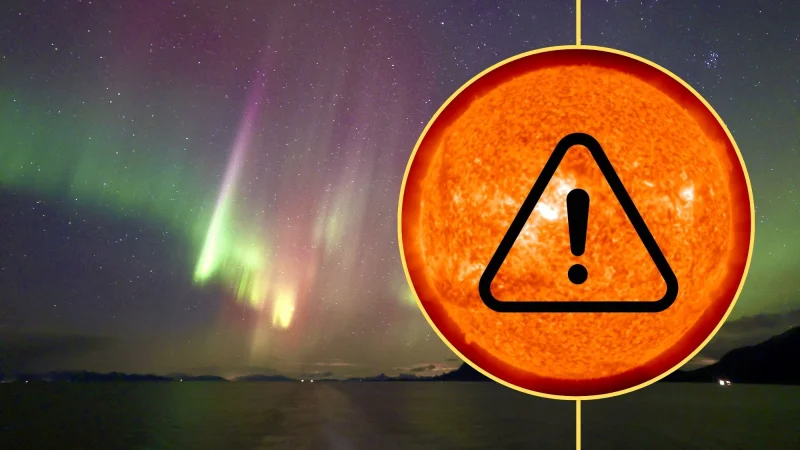
NOAA issued a G2 geomagnetic storm watch for Oct. 9 after a powerful eruption from the sun early on Oct. 6 hurled a coronal mass ejection toward Earth. The alert points to a possible bump in aurora activity later this week, with the northern lights potentially visible farther south than usual.
That is why people are searching for Aurora Borealis now: a moderate space-weather watch has a near-term date attached to it, and that date is Oct. 9. NOAA's Space Weather Prediction Center said the CME could brighten the northern lights across parts of the northern US, including areas as low as Idaho and New York, if the blast reaches Earth with enough force.

A G2 watch is not the most severe kind of storm alert, but it is strong enough to matter. In practical terms, it means Earth may get a temporary disturbance in its magnetic environment that can make the northern lights more active and more visible than normal. The same event that can improve the sky show can also be disruptive enough to justify a formal watch, which is why the notice landed with the force of a warning even though it stops short of the highest levels.
The timing is what gives the forecast its weight. The eruption happened early on Oct. 6, the CME was aimed at Earth, and the expected arrival window is Oct. 9. That leaves a narrow span in which the display could build, peak and fade again, depending on how the CME actually arrives. If the blast is weaker than expected, the aurora may stay modest; if it arrives squarely, the lights could stretch well into the northern US.
For readers tracking the sky, this is the sort of setup that can change by the hour. A similar surge in viewing chances is the subject of other recent Aurora Borealis coverage, including a G1 watch set for Canada tonight and a weekend outlook for North America, but this latest notice is tied to one specific incoming CME and one specific date. The next thing to watch is whether Oct. 9 brings a brief flare-up in the northern lights or just a moderate space-weather event that passes with limited visible impact.