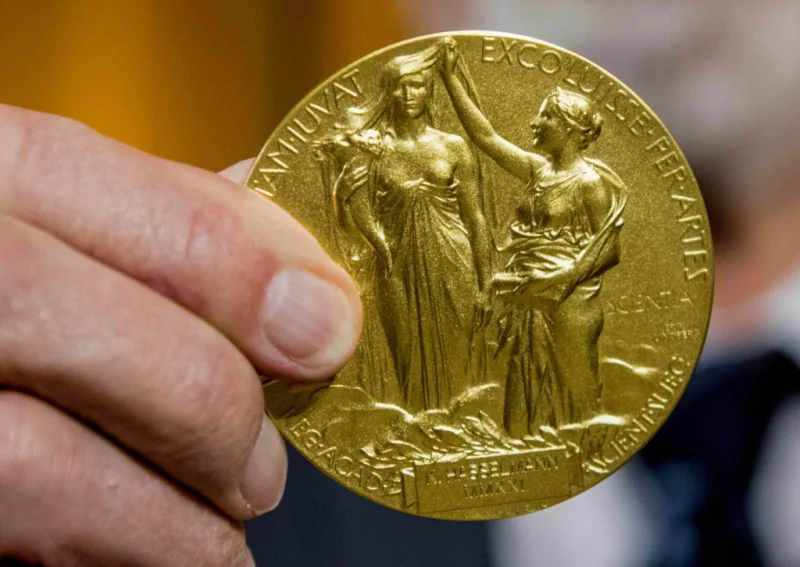
Physics World is again trying to read the Nobel Prize in Physics like a weather map, and its updated infographic now points to condensed-matter physics and particle and nuclear physics as fields that look due for recognition. The magazine says it has had some luck with this game before, most notably by keeping Anton Zeilinger on the board year after year until he won in 2022.
That is why Francis Halzen is being searched now, even if the claim is not about him personally. The magazine’s method is simple enough to be maddening: track the chronological spread of Nobel Prizes by field of endeavour, then keep naming the areas that have gone longest without a turn. By that measure, the next physics prize could come from work that has been waiting in plain sight for a while.

One of the clearest candidates sits with CERN’s ATHENA and ALPHA collaborations, which were first to trap cold antihydrogen atoms and then study them in detail. Jeffrey Hangst, a Denmark-based American physicist and a founder of both collaborations, is singled out as someone who would surely be a laureate if that line of work is rewarded. The appeal is easy to see: comparing antihydrogen and hydrogen could help explain why the universe contains far more matter than antimatter.
But the case is not neat. Physics World says the experiments have not found any significant deviations from the Standard Model description of antihydrogen, and that caveat could undercut a Nobel Prize for Hangst and one or two colleagues. It also notes that many of the methods developed by ATHENA and ALPHA can be argued to belong more to atomic and molecular physics than to particle and nuclear physics, which muddies the very category the prize would need to fit.
That is why the other candidate matters. Physics World also points to the creation of the quark–gluon plasma, a state of matter that appears only very briefly when large nuclei are collided at high energies. If condensed-matter physics and particle and nuclear physics are both overdue, then the Nobel committee will have to decide whether to reward a long-running technical triumph, a deep test of the Standard Model, or a breakthrough about the earliest form of matter itself. The answer will not wait long: the 2026 Nobel Prize in Physics will show which kind of physics, in the end, was judged to be most due.