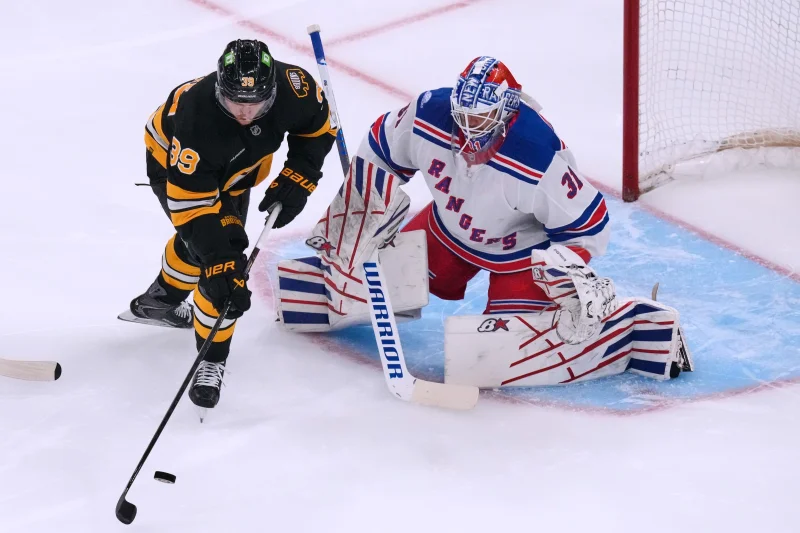
Igor Shesterkin did enough to keep the Rangers close. It still ended the same way. The Rangers lost 3-0 to the Bruins on Tuesday night in Boston, with Shesterkin finishing with 20 saves on 22 shots while Fraser Minten broke it open late in the third period.
That was the game people came to see because it put Shesterkin at the center of a loss built on collapse, not goaltending. The shots against were not heavy in volume, but they were dangerous in type, and the Bruins got the better looks when the Rangers lost shape in front of their own net.
Mike Sullivan said the problem started with the puck. The Rangers turned it over in the wrong areas of the rink, tried to play too much east-west instead of moving straight ahead, and stood on pucks when they should have kept their feet moving. That led to grade-A looks and too many odd-man rushes. He said the team gave up three 2-on-1 chances in the second period.
The breakdown was not just about one defender or one missed read. Sullivan said the forward group leaked back into the play before the defenseman returned four times in the second period, which meant the Rangers did not stay above the attack long enough to protect the rush. When that happens, the ice opens up fast, and the goalie is left reading two attackers instead of one.
Shesterkin kept doing his part anyway. He faced 22 shots and stopped 20 of them, which is usually enough to give a team a chance to steal points on a road night. Instead, the Rangers were shut out and had to watch Fraser Minten finish the job from the high slot late in the third period.
The loss lands in a season that already asks a lot from the Rangers. They entered it with the second-youngest roster in the NHL at an average age of 26.63, and Sullivan was behind the bench for his 1,000th NHL game. The night marked a milestone for him, but the postgame message was about discipline, not celebration: the structure has to hold, or Shesterkin will keep seeing too much of the game by himself.
What comes next is the same question that followed this one. The Rangers do not need more from their goalie. They need the skaters in front of him to stay above the play, replace each other cleanly, and stop turning close games into emergency shifts.