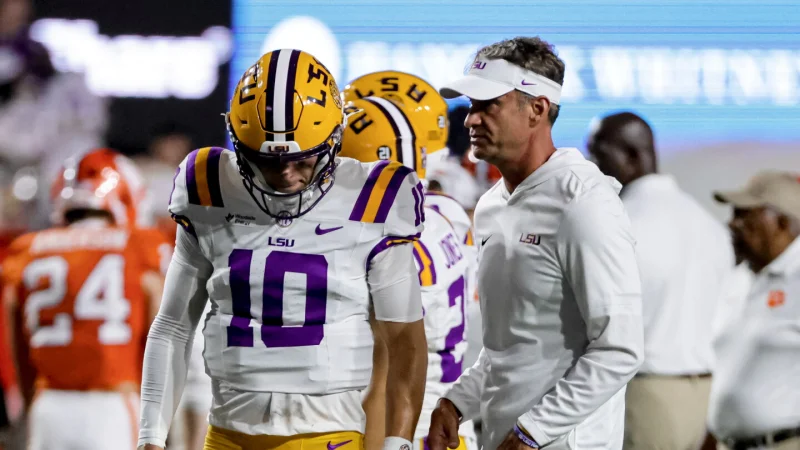
Sam Leavitt went from doubtful on Wednesday to questionable on Thursday and then off the injury report on Friday night, a fast-moving status shift that put the Ole Miss QB chatter right back at the center of the week. What looked like a routine report ended with a player’s availability changing three times in three days.
The reason people are paying attention now is simple: the change came right before game time, when injury reports matter most. College conferences have adopted them because of betting, and the SEC’s rules give it teeth, with fines for inaccurate reports ranging from $25,000 to $100,000. In a week where the desk at College GameDay joked about Lane being Lane, the story stopped being only about availability and became about whether the reports were being used as part of the game.

Leavitt’s shift is the part that gives the week its edge. Wednesday said doubtful. Thursday moved him to questionable. Friday night erased him from the injury report. That kind of movement forces the other side to prepare for more than one plan, and it is why the handling drew so much attention in the first place. If a team believes a starter might not play, it has to spend time on the backup, and that time is lost whether the starter ends up playing or not.
That is where the friction sits. Lane Kiffin’s handling of the reporting has been described as an apparent game, but the SEC does not treat injury reports as a joke. Violations typically come from programs failing to properly disclose actual injuries, and the conference can fine inaccurate reports even when the maneuver looks clever from the outside. The unresolved question is not whether the sequence was noticed; it was. The question is whether the SEC decides that the shifting designation crossed the line from gamesmanship into a punishable inaccuracy.
For now, the facts leave Ole Miss with one clear consequence and one open risk. Leavitt’s status changed three times before kickoff, and if the reporting was designed to make Ole Miss spend time preparing for Leavitt’s understudy, it worked as a tactic even before anyone decides whether it was allowed. What happens next is whether the SEC turns that into a fine, because under its own scale, the cost can be anywhere from $25,000 to $100,000.