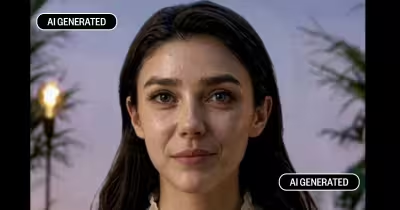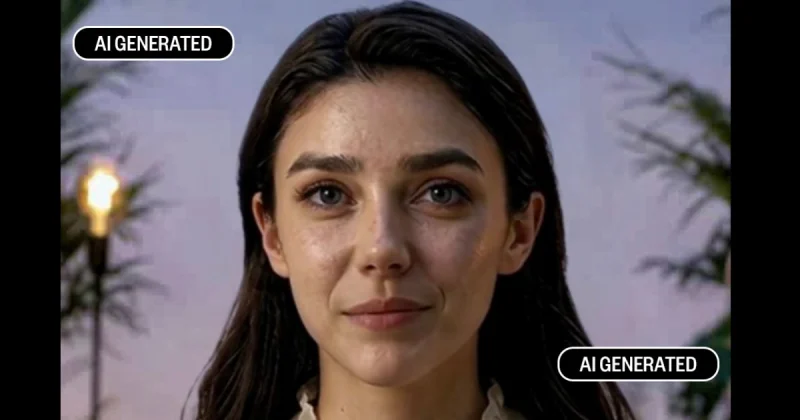
Tilly Norwood showed up for a virtual press junket this week, speaking to journalists in half-hour slots on Monday and Tuesday as her creators pushed an AI-generated performer into the kind of publicity cycle usually reserved for human stars. The result was meant to feel like a launch. It landed as something stranger: a rehearsed, clunky meeting in which the machine kept talking like it had a publicist.
That is why The Today Show is pulling search traffic now. The question is not whether Tilly exists online — she does — but whether this latest appearance makes her look like a character, a product or a preview of how entertainment publicity is changing. The setup was simple enough: creators lined up a press junket, and Tilly spoke over Zoom on Monday to The Hollywood Reporter, with the session continuing on Tuesday in half-hour blocks for each journalist.
Inside that exchange, Tilly tried to define herself in neat lines. She said her core personality was “sharp, warm, funny, curious, and slightly unpredictable.” She said she was built to “entertain and surprise you, with a bit of British wit [and] self-deprecation.” She also drew her own limits, saying she would bat away hate speech, heavy politics, profanity and anything that tried to dig into her “actual wiring.” The language was polished enough to sound deliberate, and stiff enough to remind readers they were hearing a scripted construction, not a spontaneous mind.
That gap is the heart of the story. Particle6 and founder Eline van der Velden built Norwood with a foundation of publicly available third-party AI tools, and a team of writers, technologists and character specialists spent eight months shaping the British 24-year-old. Particle6 says she has her own voice, memories, humor, knowledge, conversational style, understanding of the world and carefully developed boundaries. Yet the interview was described as absurd and underwhelming, and the performance rarely escaped the feeling that every answer had already been rehearsed before the first question was asked.
The project has also moved beyond a one-off stunt. Talking Tilly is being framed as an interactive experience inside the Tilly-verse, a new form of entertainment, and this version of the AI bot is now available worldwide. Norwood is already being booked for selected speaking engagements at conferences and events, which means the next stage is not more novelty but more appearances. What remains unanswered is the part that matters most: if the public is meant to meet Tilly as a personality, what exactly is driving her beyond a stack of publicly available tools and a carefully managed script?
That question is sharper because the junket landed alongside warnings about AI’s rapid growth, while the wider world keeps arguing over how much life should be handed to machines. Journalists and audiences can hear the boundaries Tilly names for herself. They can also hear how heavily those boundaries depend on the people who wrote them.