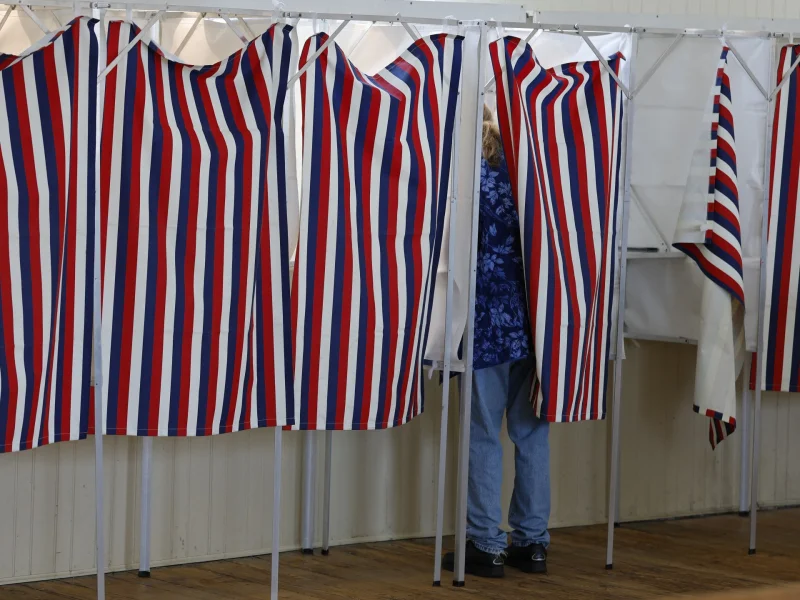
Michael Epright said he would not back any of the Senate or congressional candidates on his primary ballot and planned to write in his own name instead. “I’m disgusted with all of them,” he said at the polls in New Hampshire.
That mood was easy to find as voters cast ballots in the primary, even with contests for the U.S. Senate and the state’s 2nd Congressional District on the line. Epright said, “When I don't believe anybody could do a better job than I do, I write myself in,” citing the division he sees in Congress and the tax burden that already hangs over him.
Several voters said they were showing up more from duty than excitement, and several town moderators around New Hampshire said primaries often bring light turnout, especially when it is not a presidential election year. But the larger story was not just apathy. Some voters were making a clear tactical choice, backing candidates they believed could survive November even if they did not inspire much passion now.
Bob Lyon of Loudon said he was banking on Chris Pappas to beat the Republican candidate in November. “I’m comfortable with him, and I know that he will be the candidate in the fall,” he said, adding, “I just want to have strong numbers behind him.” Bill Horan of Epsom took a different view, saying former senator John E. Sununu is the right candidate to face a Democrat in the general election, not Scott Brown. “Years ago he was in Congress, but now he’s been out, he’s been in industry business,” Horan said, arguing that the background will matter both in the race and in governing.
Steve Rue of Pembroke said a quiet skepticism also shaped his vote. “There’s a little voice in the back of my head that says, ‘Nobody’s going to really do this the right way,’” he said, while also saying he wants state legislators to get involved in oversight of Education Freedom Accounts. Van Mosher of Bow said he supports John E. Sununu but is ready to back Scott Brown if Brown wins, and wore a red shirt to signal support for Republican candidates across the ballot. “The Senate race is the biggest one and I went with Sununu, but I have Brown stickers and Sununu stickers so I am ready to go either way,” he said.
Betty Nichols of Concord said her vote was driven by concern that the state’s school voucher-like program is taking money away from public education. “Public education is huge for me,” she said. “I don’t agree with the way it’s being funded.” For now, the primary has exposed a Republican and Democratic electorate that is divided not only over candidates, but over whether any of them deserve enthusiasm at all, and the next test is whether those low-energy choices translate into November strength or simply confirm how unsettled the field remains.