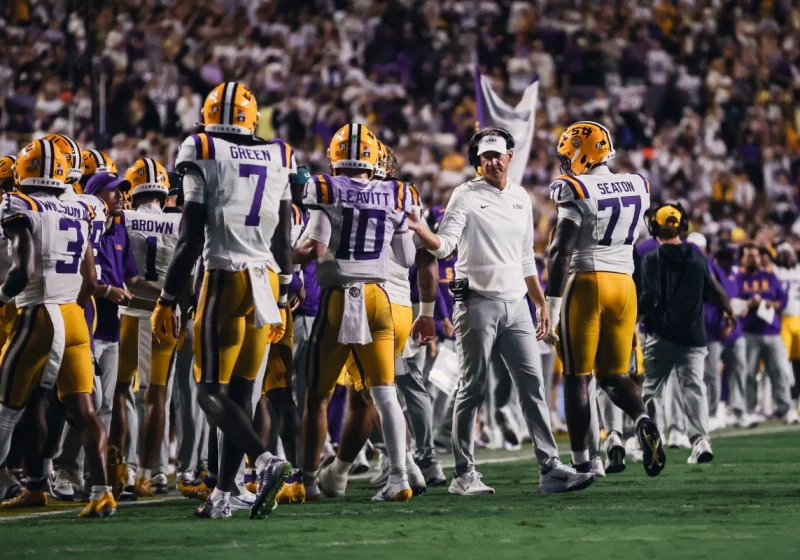
LSU and Lane Kiffin backed away from putting Dae’Quan Wright and Zxavian Harris on the roster before last Saturday’s home game against Clemson, even after a Baton Rouge judge had cleared the way for them to play. The move came after the SEC threatened a half-season suspension for the head coach and hefty fines.
Lane Kiffin had said he intended to add NFL players to his roster at LSU, and the school supported the legal effort that led Judge William Jorden, on Sept. 3, to grant a preliminary injunction against the NCAA rule at the center of the dispute. Wright and Harris had signed free agent contracts with NFL teams after going undrafted, then sought to play for LSU this season.
The case matters now because the injunction did not end the fight. It only opened a temporary path, and the SEC answered by using its own enforcement power to make the cost of following the court order too high for LSU to ignore. In practical terms, the conference made the roster decision for the school before the game was even played.

That is where the friction sits. A judge had allowed the players to suit up, but LSU still kept them off the roster once the SEC threatened discipline. The conference’s response shows how much leverage it can exert when a school tests the limits of eligibility rules, especially when the issue is no longer just about two players but about who really governs college sports.
The broader question is still unresolved. The case for Wright and Harris is temporary, and the next move could shape whether disputes like this stay inside the NCAA rulebook or drift toward conference governance. The SEC’s action suggests the power to punish may matter as much as the court order that started the fight.
There is also a larger legal backdrop. The Big 12 recently filed suit in a Texas federal court over its ability to enforce its rules against schools that voluntarily joined the conference, and that fight points in the same direction. When conference officials and school lawyers start treating roster control like a governance battle, the athletes become the test case, not the end of the story.
For Wright, the result was immediate and personal: he remained off the LSU roster despite a judge’s order that seemed to offer a route in. Whether LSU, Lane Kiffin or the players press the challenge further will decide if this becomes a one-off standoff or the start of a much broader fight over the SEC’s reach.