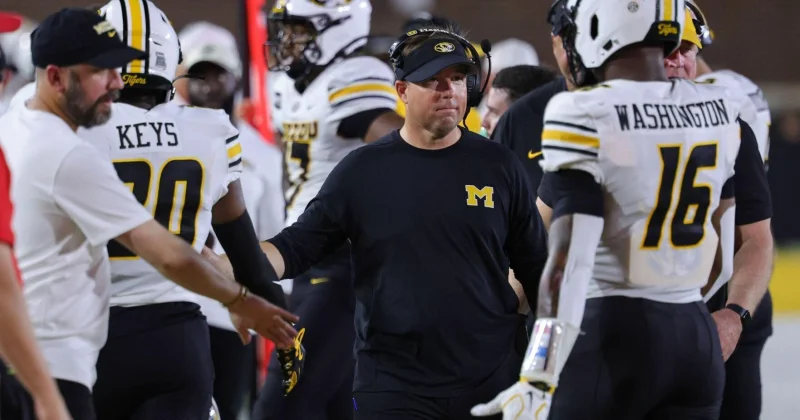
No. 25 Missouri opened its season with a 54-14 win over Arkansas Pine-Bluff on Thursday, and the first thing the game revealed was not just the score but how Corey Batoon is sorting out his defense. The Tigers mixed zone and man coverage almost evenly, then showed a 3-2-6 look on the first third down of the game, a 3rd and 12 snap that offered the clearest glimpse yet of how Missouri may line up when passing downs arrive.
That is why Austin Simmons is being searched now: the opener gave Missouri its first real 2026 data point, and the coaching staff wasted no time putting personnel and coverage ideas on display. Missouri rotated heavily in the blowout, with 41 players appearing on defense and 33 getting into the game on offense, which made the game useful as a snapshot and limited as a verdict. PFF rated backup quarterback Matt Zollers as the fourth-best offensive player on Thursday, a reminder that even in a rout the depth chart still produced something worth watching.

The numbers from Arkansas Pine-Bluff's 25 pass plays point to a defense that did not lean as hard on zone as it did across the 2025 season. Missouri used zone on 12 of those throws and man on 13, close to a 50-50 split, while last season it played zone on 62.4% of pass plays and man on 37.6%. In the game, Missouri favored Cover 3 looks when it sat in zone and Cover 1 when it went man, a clean and simple menu that fit a game in which so many depth players were on the field.
That does not yet prove a new identity. A heavy rotation in a 40-point blowout can make any defense look more basic than it will in tighter games, and the 3-2-6 package may have been a third-down answer for this opponent rather than a permanent change from the 3-1-7 structures Missouri has used before. On the opening third down, Sterling Webb lined up as the middle defensive tackle, Darris Smith and Daeden Hopkins were the edges, and Nicholas Rod was one of the two linebackers, a setup that makes sense when the first goal is to survive a long-yardage snap and get off the field.
Hudl IQ, which captures tracking data 30 times per second, is helping turn that first game into something more than a final score, and the Post-Dispatch partnered with Hudl IQ for the 2026 season to make the film-and-data picture clearer. For Missouri, the bigger answer will come not from the opener itself but from whether the next few weeks bring the same near-even zone-man split and the same third-down shape. If they do, Thursday was a tell. If they do not, it was a one-game look created by a blowout and a lot of substitutions.