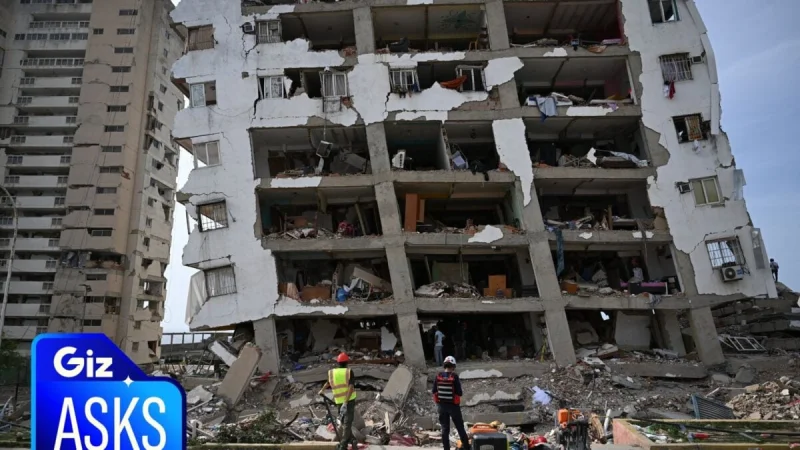
The Pacific Northwest is being measured against a future earthquake that could knock out power across a region, damage bridges, and leave tens of thousands dead or injured. Scientists say the Cascadia Subduction Zone could produce a magnitude 9 quake and tsunami with consequences that would reach far beyond the coast.
The warning matters now because the West Coast of the United States sits on the Pacific ring of fire, where major quakes are not a possibility but an expectation. The last major earthquake on the San Andreas fault was 120 years ago, and scientists say stresses there are the highest they have been in the last 1,000 years. Farther north, the Cascadia Subduction Zone has not produced a major earthquake since 1700, when a magnitude 9 event sent a tsunami across the Pacific and decimated the coast of Japan.

What makes the forecast so stark is not just the shaking. A magnitude 9 earthquake and tsunami in the Pacific Northwest would likely produce a regionwide electrical blackout, widespread bridge losses that would cut transportation mobility, prolonged gasoline shortages after pipelines are damaged, and extended natural gas outages. The same scenario carries more than $100 billion in damage and tens of thousands of casualties, a scale that would overwhelm a response system already strained by broken roads and failed communications.
That danger is not abstract. Critical infrastructure remains vulnerable to extensive damage from earthquakes, and water services may be unavailable for months after earthquakes, a failure that would complicate everything from firefighting to basic sanitation. Schools, hospitals, fire stations, water and wastewater systems, electricity, natural gas, liquid fuels, communications and transportation all sit in the same risk field, which means one major rupture could trigger a chain of outages that lasts long after the ground stops moving.
The friction is that the hazard is widely understood while the fixes remain uneven. Scientists say the next major disaster is a matter of when, not if, but much of the infrastructure that would determine whether the Pacific Northwest can recover is still exposed. The question is no longer whether a megaquake could happen; it is whether the region will keep allowing the systems it depends on to stay vulnerable until it does.