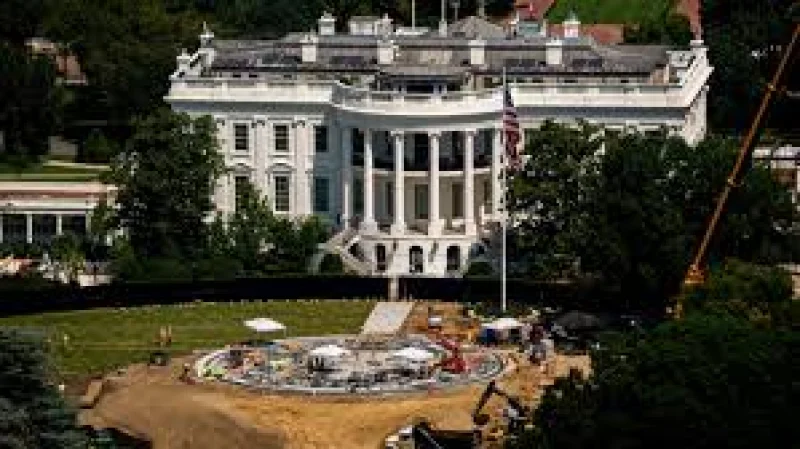
The US Supreme Court on Monday let construction of Donald Trump’s $400m White House ballroom move ahead, overturning lower court orders that had blocked the above-ground portion of the project. The 5-4 ruling gives the Trump administration the emergency relief it sought, at least for now.
The timing matters because the court had already stepped in on Friday with a temporary order, and Monday’s unsigned decision made that pause stick while the justices weighed the lawsuit. The White House says the project will be substantially finished by November and fully completed by August 2028.
For people watching the case closely, the fight is not abstract. The ballroom is replacing part of the historic East Wing after Trump demolished it last autumn to begin building the project, and the challenge came from the National Trust for Historic Preservation, which said the president did not have unilateral authority to proceed. One local resident, Alison Hoagland, said she visits the neighbourhood once a month and told the court she would suffer both professional and personal injuries if a ballroom of the proposed form and scale were built.

The majority did not rule on whether the East Wing project is lawful. Instead, the five justices said the preservation group likely lacked standing to sue and that the Trump administration had shown it would suffer irreparable harm if the stay remained in place. That left construction free to continue even as the underlying legal questions stay unresolved.
That is where the split on the court becomes impossible to miss. Chief Justice John Roberts joined the three liberal justices in dissent and wrote that construction is likely unlawful because Congress has not approved the project. He also said Monday’s decision is no victory for the separation of powers, a warning that the court’s emergency order does not settle the deeper fight over who gets to decide whether the ballroom can exist at all.
Trump responded by saying he was pleased that what he called a baseless lawsuit had failed to stop the work. He also said the building would be one of the greatest ever constructed in Washington, DC, and has repeatedly argued that the White House needs a larger events space, later adding that the ballroom was important for his security after an alleged assassination attempt at the White House Correspondents’ Association dinner in April.
So the immediate answer is simple: the construction continues. The harder question is whether Congress will approve the project before the legal challenge returns in another form, because Roberts has now put the central problem in plain view — the work can advance, but its legality has not been resolved.