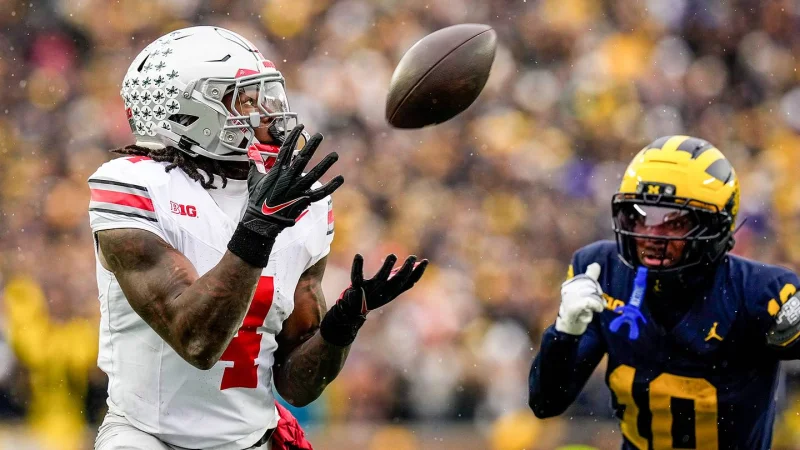
College football’s spending race has moved into a different gear before the 2026 season. Top teams are now paying two to three times what Ohio State spent through outside NIL deals on its roster before the 2024 national championship, and that earlier figure was already public because Ross Bjork said it out loud.
Bjork’s disclosure put a hard number on something schools usually keep hidden. Ohio State, he said, spent roughly $20 million. That figure is now the measuring stick for a market that has climbed fast enough to make even a $20 million roster look almost ordinary at the high end.
The reason people in the sport are talking about Darian Mensah and roster spending now is simple: coaches and administrators are trying to price the next season before it begins. During the summer, Sports Illustrated spoke with more than 40 head coaches, athletic directors, general managers and agents, and the picture they described was one of escalating costs across the board. A power-conference coach put it bluntly: if a program is not spending at least $20 million, it will struggle to compete.
That threshold matters because it is no longer being treated like an elite exception. Most coaches believe $20 million is roughly the average even among non–Power 2 leagues, and several think those leagues are already higher than that. In the Big Ten and SEC, median figures are thought to sit well north of the cap set by the House settlement, which is more than $21 million for the upcoming athletics season across all sports.
The sharpest friction in the market is what insiders believe about the teams at the top. Industry sources say Indiana’s title-winning squad spent slightly more than Ohio State did, but they do not believe Indiana was anywhere near $30 million, let alone $40 million. That leaves a gap between what rivals have claimed and what people who track these deals think is realistic, even as spending climbs well beyond the levels that won the last title.
Top competitors in 2026 are now spending two to three times Ohio State’s pre-2024 national championship outlay, a jump that shows how quickly roster-building has become a bidding war rather than a side expense. The numbers are closely guarded and not officially published, which is why the market keeps getting discussed in estimates instead of disclosures.
What comes next is not a single new public ledger but a harder, costlier baseline. Programs that hope to stay in the race now have to plan around a market where $20 million is the floor in many conversations, the Big Ten and SEC are believed to sit above the House settlement cap, and the biggest question is no longer whether spending will rise, but which schools can keep up with it.