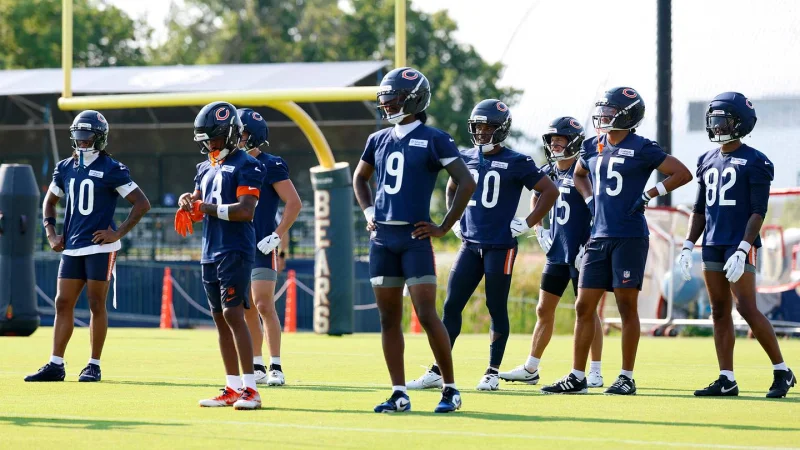
Dillon Thieneman keeps finding ways to show up in camp, and the latest example was an interception during joint practice against the Bengals. For the Bears, that play fit a bigger pattern: his speed and instincts have started to show up more often as training camp has worn on.
That is why his name keeps coming up now. Thieneman is a first-round pick, and the attention follows what the Bears are seeing every day after practice, when they post top speed numbers. Rome Odunze said Thieneman has been running to the ball every time he is on the field and has been clocked at 22 miles per hour and 21 miles per hour on the speed board day in and day out.
Odunze said the speed is not just a number on a board. It shows up in how Thieneman closes on plays and how quickly he gets involved once the ball is snapped. Early in camp, Odunze said, Thieneman came down on an in-breaking route and broke up the play, the kind of snap that requires timing, field awareness and a fast read on what is happening around him.

The interception against the Bengals added another layer. It was a play made with range and anticipation, the kind that can turn a camp rep into a real talking point. Thieneman also appeared in a Bears defensive speed sequence in the first series with D'Marco Jackson and Devin Bush, another reminder that his movement is drawing as much attention as his results.
What still separates camp flashes from full-time impact is the part Odunze pointed to most clearly: the learning curve. He said the game is slowing down for Thieneman and that he is seeing things a lot quicker, but he is still learning NFL offenses and receivers. That matters because speed can erase space, yet coverage in the NFL still depends on recognition, angles and trust in what comes next.
The Bears have been tracking players for speed during camp and posting the top times after practices, so Thieneman’s 21-to-22-mile-per-hour readings are not happening in a vacuum. They are part of a larger picture in which athletic ability is beginning to match the first-round billing. The next step is less about proving he can run and more about proving he can keep turning those reads into plays once the games start to count.