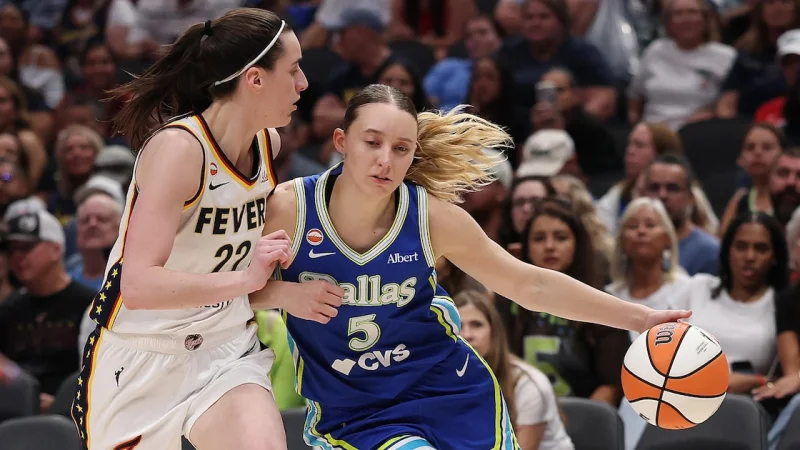
The Dallas Wings beat the Indiana Fever 91-85 on Thursday night, but the sequence people will remember came with less than 10 seconds left in the second quarter. Caitlin Clark was controlling the ball when Paige Bueckers wrapped up her left arm to stop the possession before halftime, drawing a common foul and setting off a brief exchange between two players who have already made this matchup feel bigger than a single game.
The contact mattered because Dallas had a foul to give, and the play still ended with Clark appearing frustrated enough to fire the ball down the court as the teams headed to the locker room. The ball sailed near Bueckers’ head, a sharp finish to a first-half moment that turned a routine stoppage into the night’s most talked-about sequence. Bueckers later returned to the center of the game in a different way, picking up a technical foul in the third quarter after arguing with an official.
The result itself kept the focus on the players who have come to define this matchup. Arike Ogunbowale led Dallas with 32 points and Bueckers added eight assists, while Kelsey Mitchell scored 37 for Indiana and Clark finished with a team-high nine assists. Last week, the Fever beat the Wings 98-87 in a game where Clark and Bueckers each scored 29 points, and Clark afterward called Bueckers an incredible and tremendous player who makes life difficult defensively and is a really tough guard.
That is what gives Thursday night’s foul extra weight. It was not just a late-second-quarter stop; it was another collision point in a rivalry that already has a recent high-scoring chapter and now has another heated sequence attached to it. Television microphones did not catch the words between Clark and Bueckers, but the body language made the exchange easy to read, and the technical in the third quarter showed the edge from that first-half moment did not fade after halftime.
What is still missing is the one detail that would explain the whole scene: exactly what was said when Clark and Bueckers went face to face before the break. Until that is clear, the play stands on its own as the kind of hard, personal possession that can change the tone of a game even when the final score stays within reach.