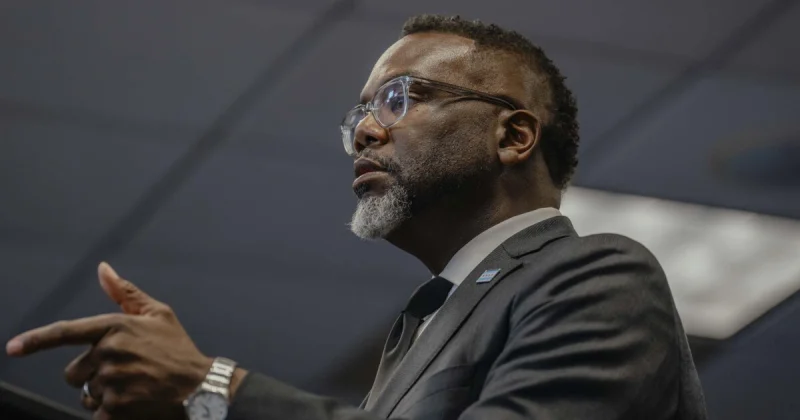
Chicago will make the second half of its advance pension payment this year, Mayor Brandon Johnson said Thursday, but he stopped short of saying when the money will go out or what funds will be used. He told investors the city still intends to meet the obligation, calling it a question of when, not if.
The remarks came at the Chicago Investors Conference, where Johnson was making the case that Chicago remains committed to its finances even as investors weigh the city’s next moves. Paula Worthington, who attended the conference, said the mayor did not offer any additional information about the timing of the payment or the source of the money, but that the reaffirmation itself was welcome from a credit perspective.
That matters because the payment is not a small one. Chicago is dealing with a $260 million pension installment, and the delay question has been tied to property tax delays from Cook County. Johnson said the uncertainty is not about whether the city will pay, but when it will be able to do so.
He paired that commitment with a broader argument that the city’s finances are moving in the right direction. Johnson said almost all of the efficiency initiatives his administration has pursued are on or ahead of target, and said they are saving the city millions of dollars. He also said the city’s online sports wagering tax and social media amusement taxes are 69% and 25% above projections, which he cast as proof that structural progressive revenue sources are outperforming expectations.
The city’s fiscal pitch comes as the Chicago Financial Future Task Force continues to loom over the debate after its final report on May 31. Some aldermen have criticized the administration for not moving on a wider set of efficiency proposals from the Ernst & Young report, and the city’s general obligation ratings remain in the triple-B range. Jim Reynolds, who has argued Chicago should be a double-A credit, said the city could reach that level with the right mix of fiscal solutions.
There is still a gap at the center of Johnson’s message: the city says it will make the payment this year, but has not said when, and has not said what money will be tapped to do it. Howard Cure called the county’s property tax delays a shame, and that remains the practical obstacle standing between a promised payment and a completed one. For investors, the commitment is clear. The calendar is not.