The US Fish & Wildlife Service said on August 14 that it will take no further action on its drain-tile setback review after a flood of opposition from hunters, waterfowl groups and lawmakers. The agency thanked more than 200,000 commenters and said it is still reviewing the information it received.
The decision follows a late-July notice that opened a 14-day comment window on a potential change affecting drain tiles near protected wetlands in the Prairie Potholes Region, where conservation easements bought with Duck Stamp money are meant to keep key wetlands in their natural state. Those easements can stay in place even when land changes hands, which is why the rule mattered to private owners as well as the people trying to protect breeding habitat.
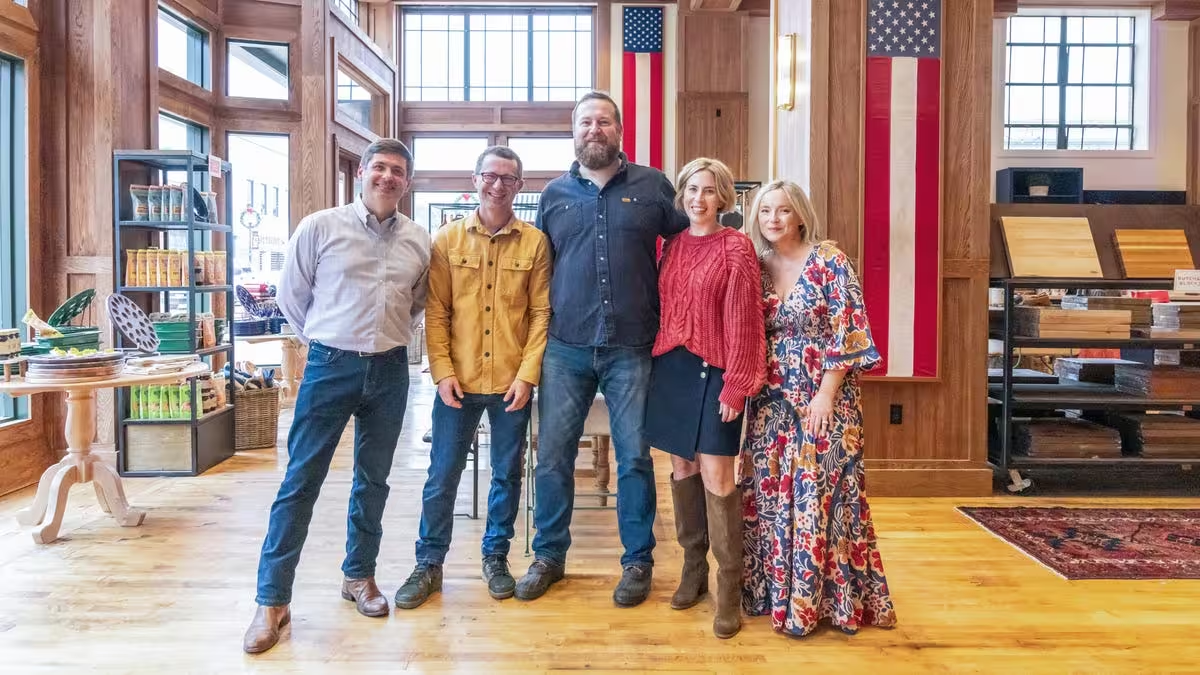
For Brad Bortner, the response was unlike anything he has seen. He said the 219,000 comments from hunters and the joint letter from major waterfowl groups were unprecedented, and added that in 50 years as a waterfowl hunter and 40 years as a biologist, he had never seen such a unified movement. Ducks Unlimited had already launched its “Don’t Drain the Duck Factory” campaign after the comment window opened, and a broad coalition of waterfowl groups later asked Secretary of the Interior Doug Burgum to keep the current setback rules in place.
The agency’s own statement showed why the fight was so sharp. It said it is trying to protect the wetland easements purchased by the USFWS while also safeguarding private landowners’ use of their lands outside the easement boundaries, a line that captures the balance at the center of the dispute. That balance matters in the Prairie Potholes Region, described by conservation advocates as North America’s critical waterfowl breeding ground, and it has been reinforced for years by hunters and anglers who have put billions into conservation through Pittman-Robinson contributions and Duck Stamp dollars.
What remains unresolved is the exact rule language the agency was examining, but the practical result is clear: for now, the setback review is on hold. With no further action planned at this time, landowners and conservation groups in Montana, the Dakotas, Minnesota and Iowa are left with the current rules in place while the agency weighs what it has heard.