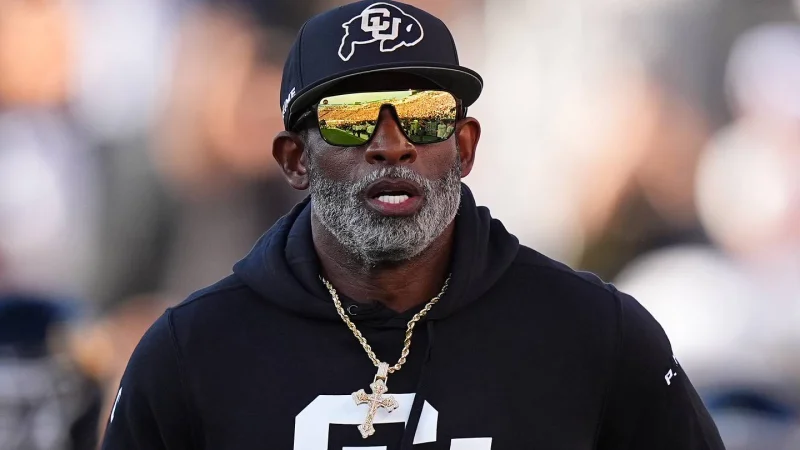
Sports Illustrated has given Colorado Buffaloes football a number to chase in 2026: Kaidon Salter is projected to throw for 3,100 yards, 25 touchdowns and 10 interceptions while adding 325 rushing yards and four scores on the ground. It is the clearest sign yet of how the offense is expected to look after a 2025 season in which Colorado produced no 1,000-yard offensive player.
The timing matters because Deion Sanders has already changed the staff around Salter. Brennan Marion is in as offensive coordinator, Chris Marve is set to run the defense, and the Buffaloes are trying to turn a season without a single offensive star into something more balanced and far more dangerous. That is why the projection has become a useful starting point rather than a throwaway forecast: it puts a hard statistical ceiling on what Colorado hopes the new structure can deliver.

Marion’s system is built around the Go-Go offense, with RPO concepts that let the quarterback keep defenses guessing without forcing him to live as a runner. In that setup, Lewis does not need to turn to his legs often, even if the offense still asks for explosive plays. The design also avoids centering everything on one bellcow back, leaning instead toward a thunder and lightning combination that should spread touches across the running game rather than funnel them to one player.
That is where the projection becomes interesting. A passing line of 3,100 yards and 25 touchdowns sounds like a clear lead role for Salter, but the offense around him is supposed to be distributed, not built on one back carrying the entire load. Colorado Buffaloes football spent 2025 without a 1,000-yard performer and without a defender who reached 90 tackles or 2.5 sacks, so the question is no longer whether change is coming. It is whether the new offense can create volume in enough places to make those numbers real without asking one player to do all the work.
Salter, a four-star talent, now sits at the center of that answer. If the projection holds, Colorado will have a quarterback who can drive production through the air, add a little on the ground and keep the offense efficient enough for the rest of Marion’s plan to matter. If it does not, the Buffaloes will be left with the same problem they spent the offseason trying to solve: too few totals, spread too thin, and not enough payoff when the games turn on execution.