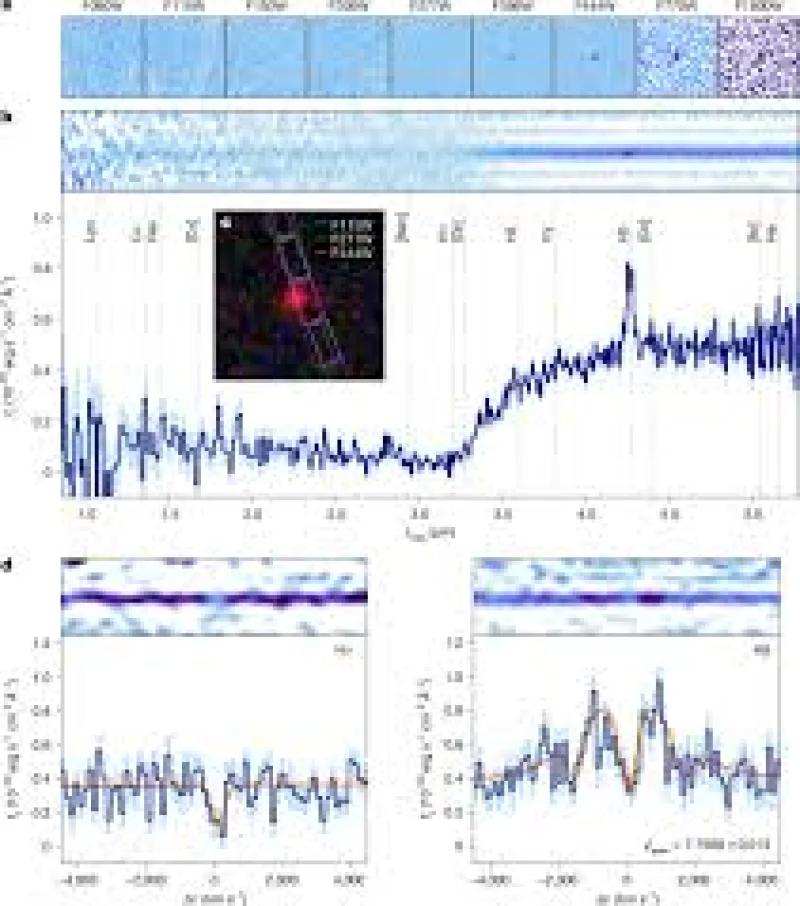
Astronomers say they have identified a new kind of cosmic object in NASA's James Webb space telescope data: a black hole star called MoM-BH*-1. The object is about the size of the entire solar system, glows with a brilliant red light and is thought to have existed 660 million years after the big bang.
The claim centers on an extremely bright red spot hidden in the constellation of Cetus, the Whale, about 30 billion light years from Earth. Dr Rohan Naidu said his team found a new type of astrophysical object that shines with the energy usually linked to black holes, not stars, but still carries signatures classically associated with stars.
That is what makes the finding matter now. The same object releases about 100 billion times more energy than any known star can produce, and that power is far closer to what astronomers observe from black holes than from stars. Naidu said the light is almost entirely red and then abruptly disappears below a certain wavelength, a pattern he called unlike anything in the telescope's image archive. His team was using James Webb to hunt the most distant galaxies in the known universe when the red spot turned up.

Computer simulations sharpen the case while also exposing the problem. They suggest the object is a black hole swaddled in dense gas, so heavily wrapped that it radiates like a star. That helps explain why MoM-BH*-1 can look stellar and black hole-like at the same time. It also explains why ordinary category lines do not hold: the glow is not coming from a normal star, but from matter around a black hole dense enough to mimic one.
If the interpretation holds, the implications go well beyond one unusual dot. Naidu said scores of other mysterious Little Red Dots in James Webb images could also be black hole stars. He thinks they may represent the first swaddled stage in the growth of almost every supermassive black hole, the kind found at the centres of almost all galaxies, including the Milky Way. Those black holes are thought to help shape the fate of their galaxies.
That would make black hole stars more than a curiosity. It would turn them into a missing piece in the story of how the early universe built the engines now sitting at the hearts of galaxies. The team has already shown it can pull rare objects from James Webb data, having previously identified Mom-z14, a galaxy that formed 280 million years after the big bang. The harder task now is proving that MoM-BH*-1 is truly a new class of object and not another extreme variation on something astronomers already know.