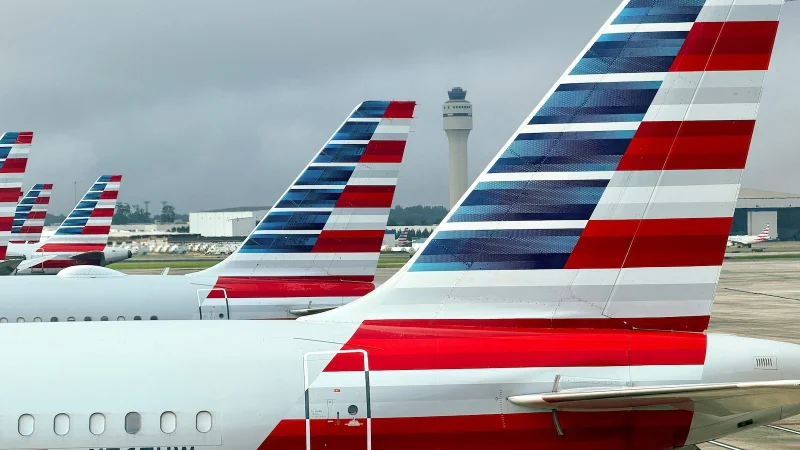
An American Airlines Boeing 737 returned to Myrtle Beach, South Carolina, on Monday after striking birds during takeoff and sending flames from an engine, forcing an emergency turnaround on flight 1760 with 181 people on board.
The flight had been headed to Charlotte, North Carolina, when the pilot reported an engine problem and called mayday shortly after takeoff, a radio recording from LiveATC.net showed. Another pilot on the radio said he saw the aircraft take up birds, apparently in the left side engine. From the beach, Patrick Gotwalt recorded video showing flames coming from the engine, while Lindsey Mackey said she heard several loud popping noises and saw orange flashes coming from the left wing.

The plane landed back in Myrtle Beach safely. American Airlines said the aircraft was taken out of service and would be inspected by its maintenance team, while the FAA said the crew reported striking a bird as it departed and that it will investigate the incident. The return ended what had already become a serious in-flight emergency, but it also left the next question plain: how much damage the engine took and how long the jet will stay grounded.
Workers later found the remains of the birds on the runway as the plane circled and came back in, the material aviation crews call snarge. That debris is sent to the Smithsonian Institution’s lab in Washington DC to determine the species involved. The episode fits a broader pattern the FAA tracks closely: in 2025, more than 24,000 wildlife strikes were reported in the United States. American said its team was working to get customers on their way to Charlotte as soon as possible.
What Monday made clear was that the plane came down safely despite visible flames and a mayday call. What remains unanswered is how badly the bird strike affected the engine and when American Airlines will be able to return the Boeing 737 to service.