


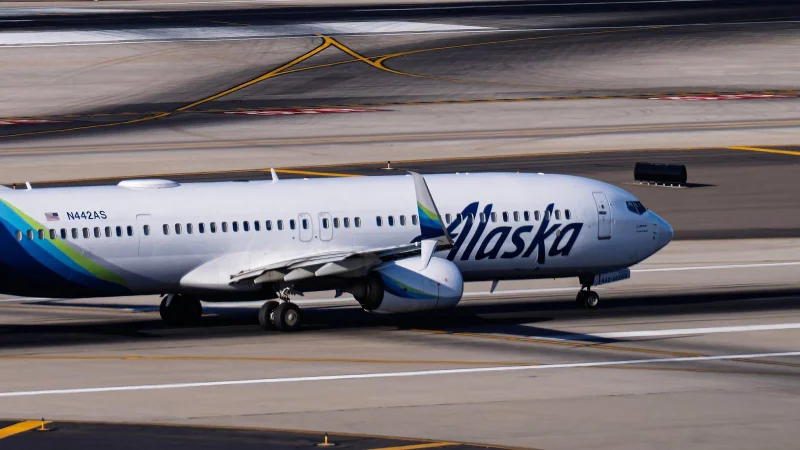
Alaska Airlines Flight 305 never left Miami International Airport on Sunday. Flight attendants reported threats from multiple travelers, pilots sealed the flight deck, shut down the engines and called for law enforcement support before the Boeing 737-890 was cancelled.
The disruption hit a flight bound for Seattle-Tacoma Airport and forced every passenger off the aircraft for an investigation by Miami-Dade Sheriff's Office Airport District deputies. It is the kind of event that can freeze a departure in minutes: once the crew heard that customers had threatened to take the aircraft over, the pilots told the tower they were going into lockdown protocol while the plane was still on the ramp.

Andy Slater shared audio on X that captured that moment. In it, the pilots can be heard telling the tower that they had set the parking brake, were shutting down the engine and needed a lockdown. The wording matters because it shows how seriously the crew took the report before anyone on the ground had reached the aircraft.
But the ground response did not match the alarm in the cockpit. The Miami-Dade Sheriff's Office later formally determined that the two disruptive passengers posed no credible threat, and no criminal charges were pressed by local police. The two were booked on a separate flight, leaving the airline to sort out the operational fallout rather than a prosecution.
That split between what the crew heard and what investigators found is the part that still defines the incident. A reported threat was enough to stop a commercial departure, trigger a cockpit lockdown and empty the cabin, even though the official review did not turn up a credible danger. For passengers, that means the trip ended on the ramp; for the airline, it leaves the larger question of what discipline, if any, will follow inside the company. Lockdown protocol, used after the September 11 attacks to keep the reinforced flight deck secure, exists for moments exactly like this — when crews cannot wait to find out whether a threat is real.
