


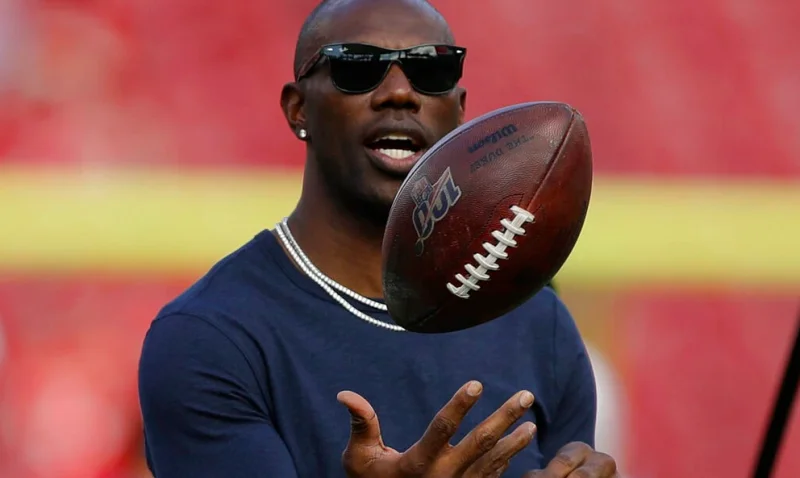
Terrell Owens says the money he made in the NFL did not last the way people might expect. Speaking at the FOS Huddle in the Hamptons, he said his roughly $80 million in career earnings moved so fast that he now wonders what happened to it.
That is why the keyword is drawing fresh attention now: Owens did not frame his finances as a distant regret, but as a live reality tied to the status he still carries as a Hall of Famer. He said that if he were just a 10-year player and not a Hall of Famer, he would honestly be struggling.
Owens has been public about money, pride and resentment before. In 2018, he refused to travel to Canton, Ohio for the Pro Football Hall of Fame ceremony after taking offense at waiting until his third year of eligibility for induction. He became the first living inductee to skip the official event, hosted his own celebration and gave his acceptance speech at the University of Tennessee at Chattanooga instead.

His comments now land with extra weight because they come from one of the NFL's most productive receivers. Owens finished third all time with 15,934 receiving yards and third with 153 receiving touchdowns, and reports have pegged his career earnings at $79.6 million. Onstage, he put the point in plain terms: the money goes fast, and Hall of Fame status is part of what still keeps him from financial strain.
That leaves the uncomfortable part of the story intact. Owens said he was never in trouble with the law as a player and argued that false narratives and media malcontents helped shape how he was seen during his years with the Dallas Cowboys and Philadelphia Eagles, yet the issue now is not reputation but what remains of his earnings. He also said that playing in Texas for three seasons helped him avoid state income taxes, a reminder that even big contracts can shrink quickly once taxes and living costs are stripped away.
What Owens has not answered is the one number that matters most: how much of that fortune is still available to him now. For the moment, he has made clear that the gold Hall Of Fame jacket is not just ceremonial. It is part of the financial cushion that keeps his postcareer life from becoming a warning shot about how fast an $80 million legacy can disappear.
