


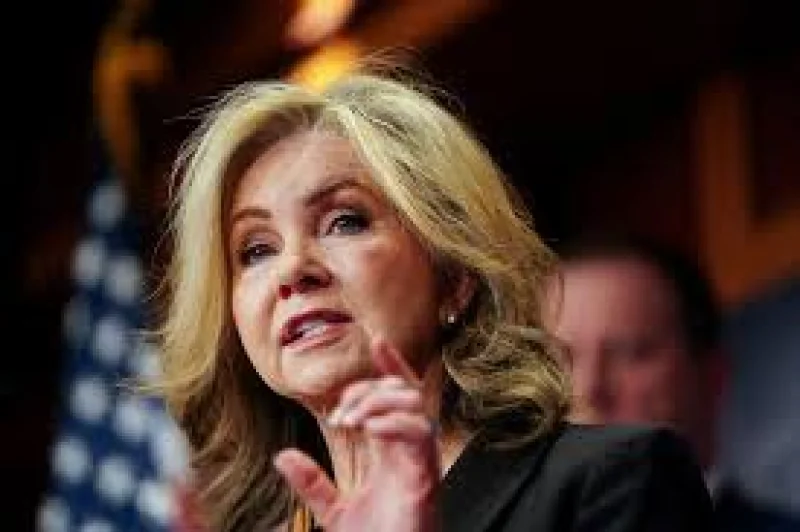
Marsha Blackburn is heading into Thursday’s Republican gubernatorial primary in Tennessee as the clear frontrunner, with Monty Fritts and John Rose also on the ballot as Republicans choose who will try to succeed term-limited GOP Gov. Bill Lee.
The race matters now because Thursday is not just another stop on the calendar. It is the first test of whether Blackburn can move from the U.S. Senate to the governor’s office while the state’s broader nominating contests for state and federal offices are underway. Blackburn’s lead gives her the advantage, but the vote will decide whether that momentum turns into a nomination or gets slowed by a field that still includes Rose and Fritts.
Blackburn has tried to tie herself directly to Donald Trump’s political message. On the eve of the primary, she posted that as Trump sends power and authority back to the states, she is ready to deliver for the people of the Volunteer State and make Tennessee America’s conservative leader. Trump, though, kept his distance from the contest even as he praised her. In January, he said he had begged her not to run because he did not want to lose her in the Senate, then added that she would make a good governor.

His comments cut in two directions. He also called Rose a staunch loyalist, a signal that Blackburn is not the only Republican in the race with a direct line to the Trump base. That leaves Thursday’s vote with a built-in contradiction: Blackburn is the favorite, but Trump’s own words suggest he would rather keep her in Washington D.C. than see her leave the Senate for Nashville.
For Democrats, the contest is about finding a candidate who can break through in a state that has not elected a Democrat as governor in two decades. Five Democrats are seeking the party’s nomination, including Jerri Green, and the winner will face the Republican nominee in the 2026 general election. Blackburn’s move would also reshape Tennessee’s Senate picture, where Bill Hagerty is unopposed in the Republican primary as he seeks a second six-year term and five Democrats are vying to challenge him in November.
The broader ballot is changing the state’s political map as well. Memphis voters will be using a new GOP-drawn congressional district map that created an extra right-leaning seat and forced longtime Democratic Rep. Steve Cohen not to seek re-election. But the immediate question on Thursday is narrower and more personal for Tennessee Republicans: whether Blackburn’s name recognition and Trump-aligned pitch carry her past Rose and Fritts, or whether the race is still open enough to make her Senate future uncertain as the votes are counted.
