


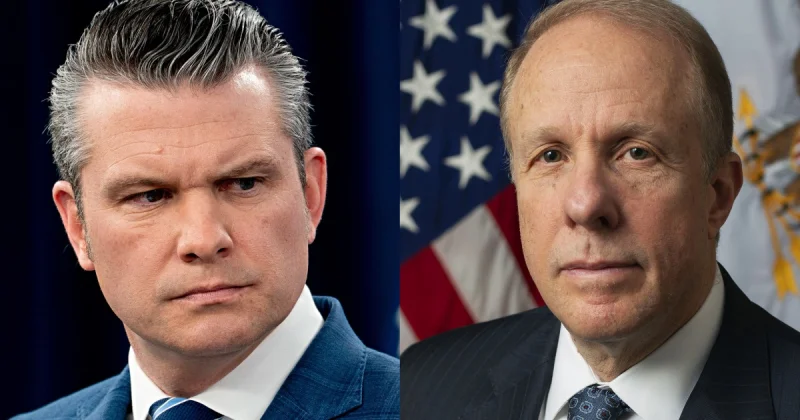
President Donald Trump reportedly confronted Defense Secretary Pete Hegseth at Camp David on Friday over whether the U.S. military was running short of the weapons it needs to keep pressure on Iran. The exchange, described in a report published Wednesday night, centered on a question that cuts straight to the administration’s war footing: how much longer the U.S. can keep firing if its stockpiles are thinning.
The reported clash matters because it was not about politics in the abstract. It was about long-range guided missiles, air-defense interceptors and Terminal High Altitude Area Defense systems, the kind of munitions that help protect U.S. personnel in Middle Eastern countries while also shaping how much force Washington can project against Iran. The report says the shortage is one reason Trump has held back from ordering additional major strikes on Iran.
Trump has spent months insisting that Iran wants a deal badly, and he repeated that line in June after Iran bombed a cargo ship in the Strait of Hormuz. Against that backdrop, a shortage of interceptors and other precision weapons would narrow the options available to the White House at the very moment the president is trying to sound most forceful. Camp David, then, was not just a retreat setting. It was where the president was said to be asking whether the military had enough ammunition left to back up his rhetoric.

In the reported exchange on the sidelines of the Friday Cabinet meeting, Trump told Hegseth he thought the munitions issue had been fixed. Hegseth, the report said, blamed Deputy Defense Secretary Stephen Feinberg for the shortages and for failing to make them clear to Trump. That is the sharpest point in the account, because it suggests a disagreement not only over the state of the stockpiles but over who was responsible for keeping the president informed.
But the story does not end there. White House Press Secretary Karoline Leavitt rejected the account outright, saying, “This is 100% fake news,” and adding, “Literally never happened. And President Trump has the utmost confidence in Secretary Hegseth.” Sean Parnell also pushed back, saying Hegseth did not mislead anyone about the munitions posture and did not blame Feinberg, while calling the claims about depleted stockpiles and internal disagreements “equally fictional.”
That denial leaves the core question unresolved: whether the reported Camp David confrontation happened as described, or whether the administration is trying to shut down a damaging story about what could be an operational limit on the Iran war. If the shortages are as serious as reported, they would constrain U.S. military choices well beyond one meeting, and they would do so at the exact moment Trump is trying to keep his options open.
