


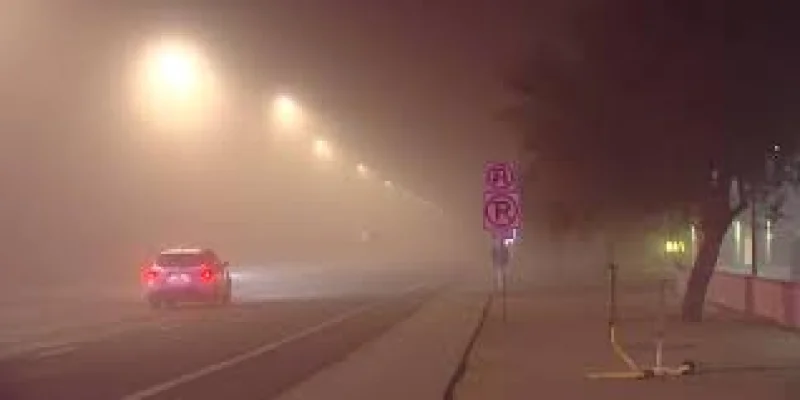
The dust storm that blew through the Valley on Monday night was rated a Category 5 on the PHX Dust Storm Scale, the highest mark on a system designed to measure how much dust is packed into the air. Unhealthy air was still hanging over Phoenix into Tuesday evening.
That is why people are searching for dust storms in Phoenix now: this was not just a visible wall of dust, but a rare event that stayed in the air long enough to matter into the next day. Ryan Heintzman, who helped create the scale, said the team has spent 15 years watching these storms and had seen only five Category 5 events. He said the scale runs from one to five and is built around exposure, not just how dramatic the storm looks from the road.

The details behind that rating are stark. The particles are roughly five times narrower than a strand of human hair, Heintzman said, and a Category 1 storm can mean about 250,000 pieces of dust inhaled in an hour. A Category 5 is five times that amount, or something like over a million pieces of dust if someone is outside for that long. In that sense, the highest category is not a label for spectacle. It is a warning about what gets into the air people breathe.
That distinction matters because the scale was built to track severity across the Valley, and ASU has now added a dashboard that shows both the storm’s category and how strongly it hit specific locations. The Monday night storm reached the top of the scale, but the air-quality impact outlasted the visual event, which is part of what made it feel worse than a quick pass of dust. The storm may have moved on, but the exposure did not end with the cloud.
Frank LoVecchio said people with lung disease, heart disease, the very young, the very old, and people who are immunosuppressed are at greater risk during events like this. That leaves the unresolved question less about how high the storm was rated than about what conditions pushed it to Category 5 in the first place. The rating is clear. The weather that produced it is still the missing piece.
