


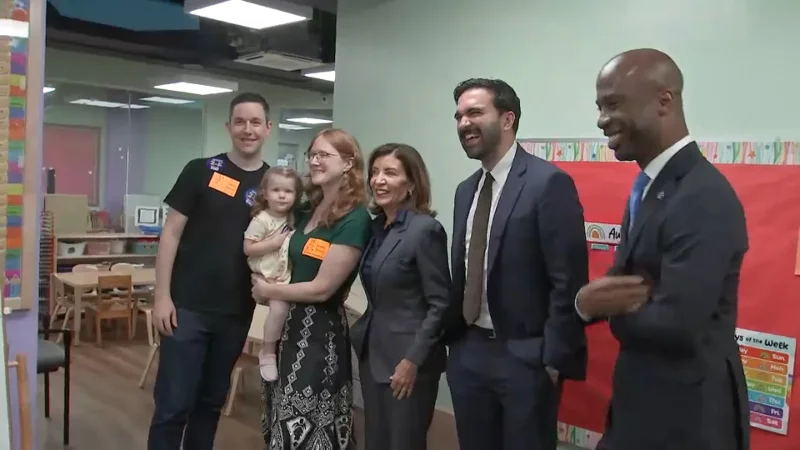
More than 2,000 children were offered seats in New York City's first 2-K class on Tuesday, a rollout that turns a new child care promise into something families can now measure, compare and fight over. The program drew more than 5,700 applications for just over 2,000 seats, and officials said the first wave of offers will save families an average of $26,000 a year for each free seat.
That kind of demand is why the launch matters now. Families were looking for a way into a program that was announced earlier this year as part of a broader push toward universal child care, and the first round of offers shows how far the city is from meeting that need. More than half of the families who received initial offers got their first-choice program, 82% were matched with one of their top three choices, and 99% of the offers went to programs families had named on their applications.

Zohran Mamdani said the response proved what many parents already know. He said the city traveled across New York to help families apply, including stops at Fort Tryon Park and the Rockaways, because the goal was to make sure parents had the information they needed before the June application period closed. He said the level of interest showed that New Yorkers need free child care now, and that the rollout is only the beginning.
The program is still being built on a foundation that looks sturdy only for the moment. Kathy Hochul committed $1.2 billion over two years to get the effort rolling, but a new study by the Center for New York City Affairs says the 2-K plan will cost $3 billion more than Mamdani has projected. Hochul has said she is committed through next year, but cannot commit future budgets yet, which leaves the most important part of the expansion — who pays for the next seats — unanswered.
For families who missed out in the first round, the next step is direct contact about waitlist options as additional seats open in the coming weeks. Families can still join waitlists even if they did not apply during the June application period, and the city plans to use this first wave of demand to shape how far the program can go next.
