


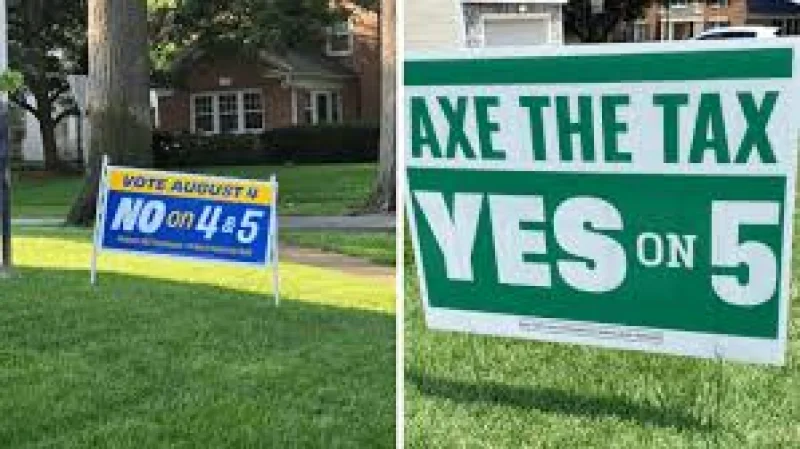
Groups have poured $26.7 million into Missouri ballot measure ads this year, and the fight is centering on two constitutional amendments that have pulled in the most attention and money. Amendment 5 is drawing the biggest share of the spotlight, with competing ads now trying to define what it would mean for taxes, government revenue and voters’ wallets.
That spending has landed months before Election Day, when political ads about candidates and ballot issues usually start flooding the airwaves. In Missouri, the ballot-measure fight has dominated that space, turning the state’s two best-known amendments into the main targets for campaign money and message wars.
Ryleigh Hindle, who reported the spending total, found that the numbers reflect a campaign season in which ballot questions, not just candidates, are commanding the most intense advertising. Amendment 4 would change Missouri’s citizen-led initiative petition process so a measure would have to pass in all eight congressional districts instead of by a simple statewide majority, while changes lawmakers place on the ballot would still need only a statewide majority. Amendment 5, placed on the ballot through HB 173, would direct lawmakers to pass additional legislation with the goal of eliminating the state’s income tax.

It would also give lawmakers authority for five years to raise the state sales tax without asking voters first and to expand the base of goods and services that can be taxed. That matters because most services are not taxed in Missouri now, and state law currently requires voter approval for sales tax changes. In other words, the amendment links a promise of a future income-tax overhaul to a broader, easier path for taxing more purchases and services in the meantime.
That is where the campaign lines collide. Proponent ads say taxpayers would keep more money they’ve earned, while opponent ads warn of catastrophic consequences to taxpayer pocketbooks and state funding. Those are not small differences in wording; they are competing warnings about whether Amendment 5 would leave families better off or squeeze them harder while also reshaping how Missouri pays for government.
The spending total does not say how much of the $26.7 million went to Amendment 5 versus Amendment 4, and that gap matters because it leaves the scale of each fight unclear. What is clear is that Missouri ballot measures have become the center of this year’s advertising push, and Amendment 5 is the measure forcing voters to sort through the sharpest claims before the election even arrives.
