


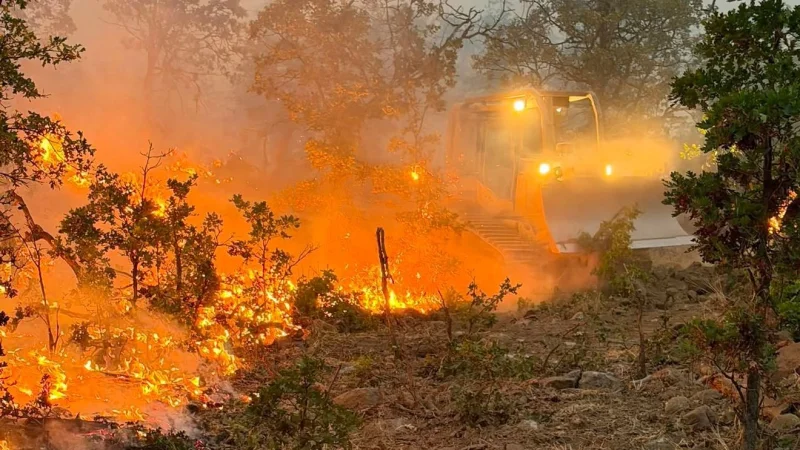
The Rowe Creek Complex reached 313,439 acres and 55% containment on Aug. 2, 2026, as crews kept working the edges of the fire 10 miles south of Fossil, Oregon. More than 2,300 personnel were assigned while Southwest Complex Incident Management Team 2 and Oregon State Fire Marshal Blue Team took unified command.
That update is why the fire is drawing fresh attention today. People in Crook County, Jefferson County, Wasco County and Wheeler County were being sent to evacuation map resources, while a Red Cross shelter operated at East Side Church, 3174 NE Third Street, in Prineville. Units of John Day Fossil Beds National Monument were closed, and a temporary flight restriction remained in place over the area.
The scale of the incident shows how much ground has already been covered and how much work remains. The blaze, which started on July 15 and was blamed on lightning, has burned through tall grass, timber and brush. Outgoing leadership from Northwest Team 2, Oregon Department of Forestry Team 3 and Oregon State Fire Marshal Red Team handed over a fire that now requires structural protection, containment lines and contingency work across a wide front.

Even with more than half the perimeter contained, the fire was not locked down. Crews monitored containment lines during Saturday's Particularly Dangerous Situation Red Flag conditions, and the fire jumped established lines near Tompkins Pass. Containment held on the southwest side near Prineville while bucket drops supported crews, but west winds also pushed the fire east toward the Mill Creek Wilderness, forcing more dozer line outside the wilderness Saturday night.
Conditions eased overnight. The wind shifted northerly, slowed, humidity recovered significantly and temperatures dropped, giving crews better weather to strengthen containment and contingency lines on Aug. 2. Structural Task Forces were shifting to reinforce existing groups in the Mill Creek and Johnson Creek areas, and crews were carrying out structural triage and point-to-point protection as they tried to keep new starts from gaining a foothold.
For now, the question is not whether the Rowe Creek Complex is still active. It is whether the line work around Trout Creek, Tompkins Pass and the wilderness edge can hold long enough to turn 55% containment into something more durable before the next wind shift tests it again.
