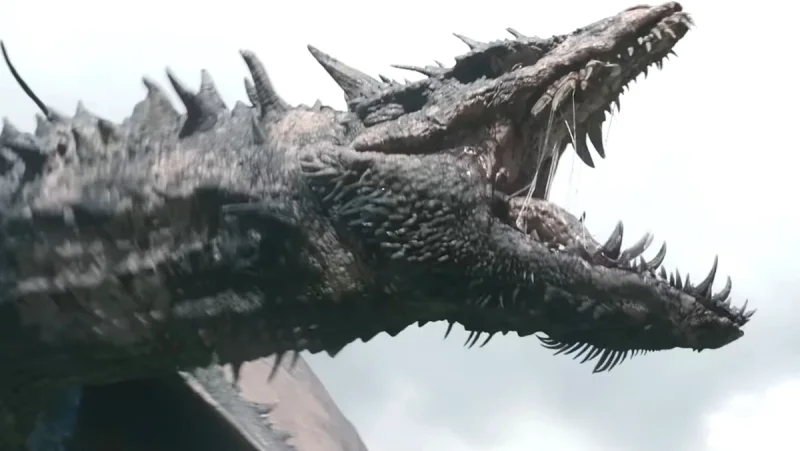
Sheepstealer goes into House of the Dragon season three, episode seven as a dragon the story itself calls wild and nearly uncontrollable, then behaves with a stillness that cuts against everything said about it. When Rhaena runs off in fear, Sheepstealer does not lunge after her. It does not take flight. It sits there, and Addam is able to grab Rhaena against her will and carry her back.
That is why viewers are searching how does Sheepstealer die now: the episode builds a dragon fight around a creature that has only ever bonded with one living thing in the entire world, yet it remains oddly passive until Syrax finally attacks it. The shift matters because the sequence is being sold as a major payoff, but the action keeps undercutting the dragon’s own nature. Sheepstealer has already encountered Daemon and Caraxes before this point, and the scene tries to treat that history as if it explains the danger, even as the dragon sits idle when motion would seem to matter most.

The setup also echoes the episode’s larger pattern. Rhaenyra flies off on her own dragon and leaves Baela and Moondancer behind to look after King’s Landing, another choice that puts convenience ahead of logic. In the same way, the fight with Sheepstealer waits for the moment the show wants rather than the moment the characters or dragons would naturally create. The comparison to Ramsey Bolton’s hounds emerging exactly when Sansa Stark was done taunting him is hard to miss: the story wants a release, not a buildup that earns it.
That leaves the central question sharper than the scene itself answers it. Syrax attacks Sheepstealer once the show remembers angry dragons should be angry, but the episode never spells out a clean mechanism for Sheepstealer’s death in the moment. What the viewer gets instead is a death sequence shaped less by dragon behavior than by the needs of the adaptation, which makes the real surprise not the fight itself but how little the show trusts its own setup to carry it through.
By the end, the answer to how does Sheepstealer die is less about a single blow than about the show’s willingness to let a wild dragon sit still long enough for the plot to catch up. That choice gives the scene its shock, but it also leaves the outcome feeling imposed rather than inevitable.