


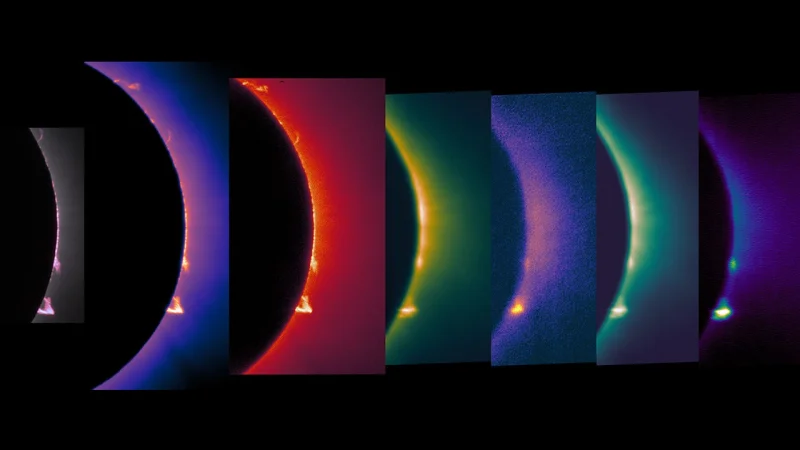
NASA-funded science teams will chase the Moon’s shadow on Wednesday, Aug. 12, when the next total solar eclipse sweeps over Greenland, Iceland and Spain. A WB-57 jet and scientific balloons will be aimed at the Sun’s corona, with cameras built to catch fast-changing structures and outflows as the daylight briefly falls away.
The timing matters because the eclipse opens a rare observing window that ground crews cannot match. From the ground, the corona can be seen for two minutes and 18 seconds at most, but the WB-57 can keep pace with the eclipse path and extend that view to nearly three minutes while flying at 50,000 feet and 460 miles per hour. Kelly Korreck said that from this unique vantage point, scientists can study the corona in a way they cannot from anywhere else in the solar system, and that the Sun’s influence on daily life, satellites and astronauts makes the moment valuable for science.
The jet will carry four cameras in its nose cone, and they will take at least 20 images per second. That speed is the point: the corona changes too quickly for a slow sequence to capture its fine motion, and the cameras are meant to follow the rapid shifts that appear as the Moon covers the Sun. The setup also reaches some infrared wavelengths that the lower atmosphere absorbs before they reach the ground, giving scientists access to light they usually cannot use from Earth’s surface.

That infrared view is one reason the flight matters beyond the eclipse itself. The corona has only been observed in those wavelengths a few times before, so each pass adds a small but important piece to the picture of how the Sun behaves. NASA is also building on the April 8, 2024 eclipse, when the SCIFLI Multispectral Airborne Imager, or SAMI, flew on a WB-57 and collected data that can be compared with the 2026 run.
Amir Caspi said every eclipse is different, and that difference is part of the work. He said the team will adjust exposure times after bright features were overexposed in the 2024 imagery, then use software developed since 2024 to process and analyze the new images. In other words, this is not just a repeat flight. It is a chance to test what the last eclipse missed and to improve how the next one is read.
The unresolved question is not whether the eclipse will be useful. It will. The question is how much the newer software and the adjusted exposures will reveal once the WB-57 has outrun the shadow and the cameras have gone dark again. For scientists watching the Sun, Aug. 12 is the next clean chance to find out.
