


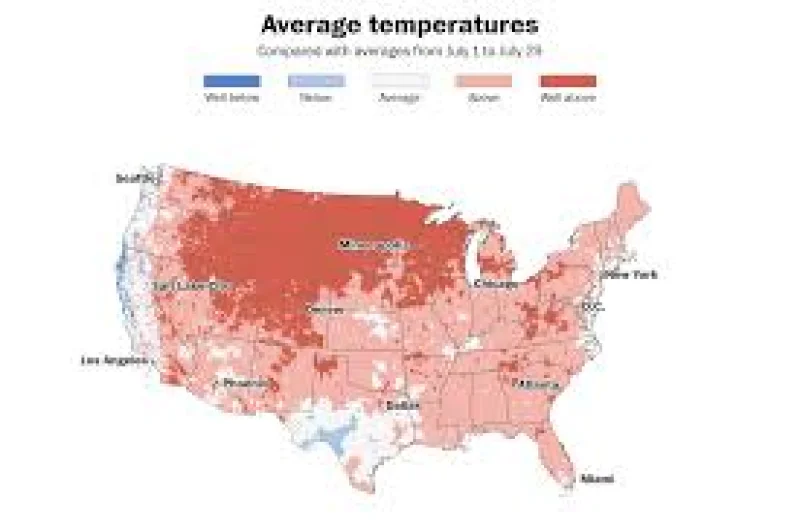
Extreme heat warnings stretched across parts of six states on Friday as more than 39 million people came under heat alerts and temperatures were expected to climb through the weekend. The hottest air was forecast to push parts of the Southwest toward 110°F to 120°F, with some desert locations approaching 49C.
That is why WTHR weather searches are spiking now: people want to know where the danger is greatest and how long it will last. The warnings covered Arizona, California, Nevada, Utah, Oklahoma and western Arkansas, including the Phoenix and Tucson metro areas, Las Vegas, Death Valley, Joshua Tree National Park, Zion National Park, Capitol Reef National Park and the Lake Powell area in Utah.
The heat was already showing its reach. A high of 119°F was recorded Thursday near Topock, Ariz., on the California border, and near Tecopa, Calif., in the Mojave Desert southwest of Death Valley National Park. Forecasts called for highs from around 100°F to as high as 120°F in some desert locations, with heat index values reaching 120°F in parts of southern Arizona and South Texas on Sunday.

More than 3.5 million people across parts of southern Arizona, the lower Rio Grande Valley in Texas and southern New Mexico faced the highest heat risk level, while another 43.4 million people across much of the Desert Southwest, including parts of California, Arizona, Nevada and southern Utah, as well as portions of Oklahoma and western Arkansas, faced a major risk level. The National Weather Service said those levels are dangerous for anyone without adequate cooling or hydration.
The friction point for anyone looking for relief is that the warnings were expected to stay in place through Sunday, and parts of California's Mojave Desert, the Coachella Valley and parts of Arizona were set to remain under extreme heat warnings through Monday night. Overnight lows were expected to stay in the upper 70s and low 80s across much of the Gulf Coast, while temperatures in desert cities were expected to remain well above 80°F overnight.
The bigger picture is that the heat dome that drove extreme heat across much of the central and eastern U.S. shifted west and was expected to intensify before expanding into the intermountain West and northern High Plains that weekend. The National Weather Service's long-range forecast said a strong cold front was expected to bring cooler temperatures later, but for now the advice was simple: drink plenty of fluids, stay in an air-conditioned room, stay out of the sun, check on relatives and neighbors, wear lightweight clothing, limit strenuous activity to early morning or evening, and act quickly if heat exhaustion or heat stroke symptoms appear. For people sweating through one of the most punishing stretches of the season, the payoff is not immediate, but the escape route is finally on the map.
