


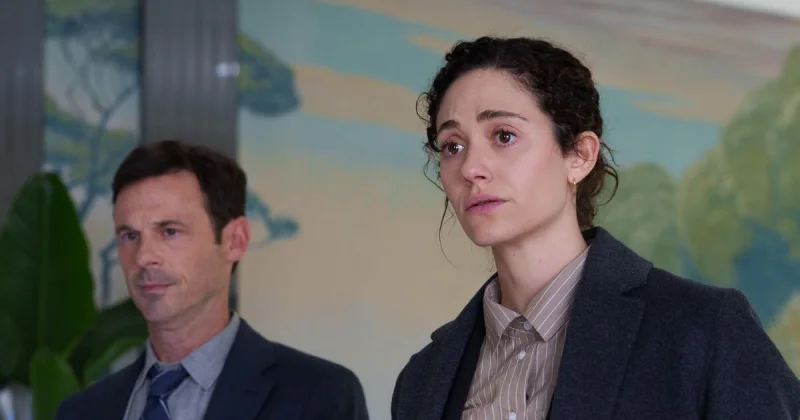
Hulu’s Furious arrives Monday with a body count and a surprise: it is being treated not just as a serial-killer story, but as a relationship drama with murder attached. The new series, created by Elizabeth Meriwether, centers on Alice Black, a former police detective now answering phones for the FBI, and Catherine, a petite young woman who moves through the story under different wigs and different names.
That framing is what makes the new series stand out now. The Los Angeles Times review places Furious in the lane of crime television, but says it is as much procedural as it is a study of people who wound each other, need each other and keep circling back. That is a sharper hook than a routine hunt for a killer, and it helps explain why viewers looking up Furious 2026 Series Reviews are likely looking for more than a plot summary.
The series opens with Catherine committing a homicide, then moves Alice into the case after Danny Kelly asks her to help investigate. Alice is not coming in cleanly. She has already become persona non grata in the NYPD after identifying Marshall, her detective boyfriend, as the man who put her in the hospital. That history matters because it gives the investigation a second pulse: she is chasing violence while still carrying proof of her own.

Catherine, meanwhile, is described as a serial killer, but not in the flat, familiar way. Her murdering is presented as a mission rather than a compulsion, which changes the shape of the character and the story around her. That is also where the friction sits. A killer is still a killer, yet the review keeps pulling her back toward something broader, one reason the series is said to be driven by relationships as much as by the procedural machinery around the dead.
Those relationships are also where the show seems to stake its claim. The review says Furious has things to say about abuse, exploitation and love, and it ties the series to the 1987 film Black Widow and to The Bride Wore Black. That debt matters because it places the series in a tradition of stories that use women at the center of crime narratives without reducing them to a single motive. Catherine is the killer, but she is also the pressure point that pulls other lives out of shape.
Alice’s own path gives the series another layer. She has wanted to join Nora Washington’s FBI department, and Nora is the one who tells her, “You requested my squad,” then asks why she wants to work “in the basement on sex crimes and crimes against children,” before adding, while drunk, that she is not a former cop because she went to a fancy school and is very smart. Those lines land like a joke and a challenge at the same time. They show Alice trying to get closer to the work she believes matters, even as her personal life has made the work harder to reach.
What remains unresolved is the exact shape of the killings. Alice believes they may be tied to sex trafficking or to a Jane Doe cold case, but the series does not spell out which murders connect to which thread. That gap is the point of the opening run, and it is the reason the story can move between procedure and pain without collapsing into either one. The next step is not whether Alice finds a killer. It is whether the case exposes a pattern big enough to explain why Catherine’s violence keeps looking less like impulse than design.
