Foster Griffin took the mound for the Washington Nationals on July 31 against the Atlanta Braves in a game that carried more weight than a late-summer division matchup usually does. Washington needed a win to stay in the hunt, and Griffin was starting in a game that could help decide whether he gets another start for the club.
The Nationals entered with a 17-4 record in Griffin starts, a mark that gave his outing a different kind of stake. That record was one of the clearest reasons the game drew attention: Washington had lost three of its last four, and this one was about more than evening the series. It was about whether a team trying to keep its season alive could keep leaning on a pitcher who had given it a better chance to win than most.
Blake Butera adjusted the lineup again. Jose Tena was in at second base, Nasim Nunez had the day off, Jacob Young started in center field, Dylan Crews moved to right field, James Wood served as the designated hitter and Brady House started at third base. Harry Ford handled the catching duties, giving Washington a different look behind the plate while Griffin worked at the front of the game.
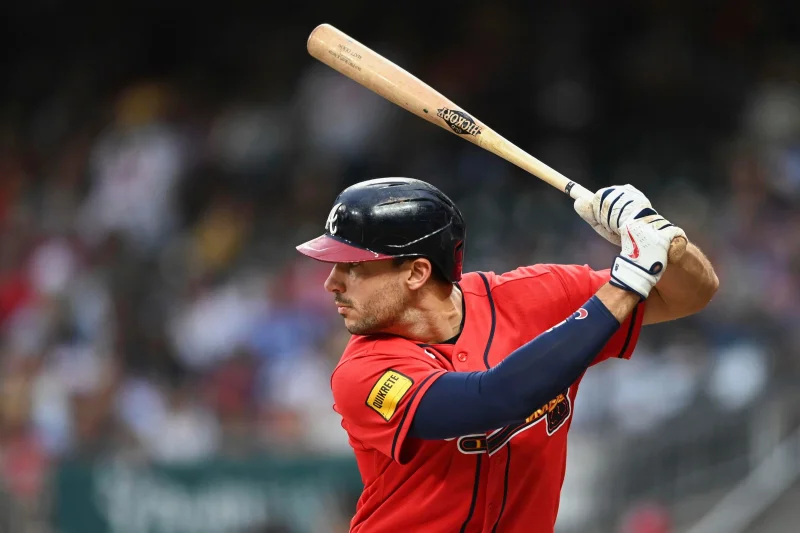
Atlanta made its own changes around Bryce Elder, who started for the Braves after an uneven season that had looked better over his last two starts. Austin Riley stayed in the lineup at third base, Mauricio Dubon shifted to left field, Joey Bart caught, and Drake Baldwin moved to designated hitter. It was the kind of reshuffling that usually says more than a manager’s pregame quote: both teams were trying to squeeze value out of the pieces in front of them.
That is where the odd shape of Griffin’s night came in. The Nationals were 17-4 when he started, but the broader message around the game was less stable than the record. His next start was not promised, and the possibility that this outing could be the last one he makes for Washington gave every inning extra edge. For a club needing better clutch hitting and more production with runners in scoring position, Griffin’s job security and the team’s standings were tied together in the same game.
So this was not just another start. It was a test of whether Griffin’s results could carry enough weight to keep him in the rotation, and whether the Nationals could keep their season pointed in the right direction long enough for that question to matter. If Washington could not turn that 17-4 record into another win, the decision on Griffin’s next turn would be easier for everyone involved.