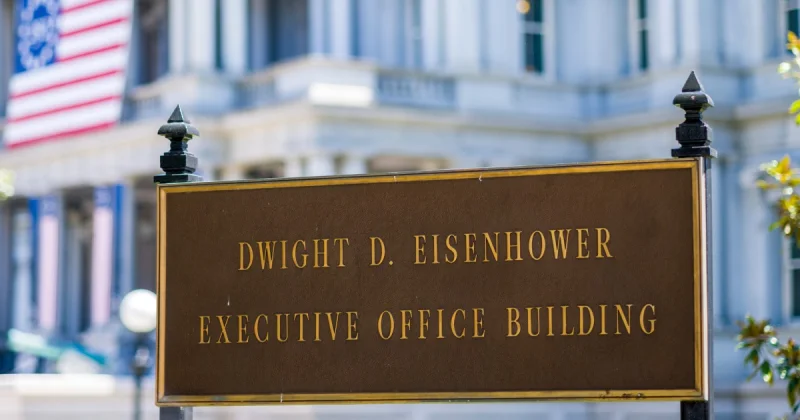
Heather Martin filed a declaration on Monday saying the White House Office of Administration had started preparations for Donald Trump’s plan to paint the Eisenhower Executive Office Building white. The filing marks the clearest new step yet in a dispute that has now moved from talk to work on the ground.
The timing matters because Trump has not dropped the project, and more than two dozen experts are still in court trying to stop it. They say paint could irreversibly damage the stone and turn the building into a taxpayers’ nightmare, because any finish applied now would have to be repaired and repainted on a regular basis.
The White House is arguing that the General Services Administration has ceded control of the building to the White House Office of Administration, which would shift the project away from the agency that normally handles maintenance of federal buildings. That matters because the General Services Administration follows the requirements of the National Historic Preservation Act and the National Environmental Policy Act, while those laws do not apply to the White House Office of Administration.

That legal difference is at the center of the fight. The administration says the White House can conduct the necessary reviews and manage the work more efficiently and economically. Preservation advocates see something else: a way to pull a politically sensitive project out of the public-review system whenever the president wants it done. Greg Werkheiser said the precedent is potentially devastating, warning that anytime the president takes a personal interest in a project, he can simply pluck it out of an agency subject to review and put it in his own shop.
The challenge is landing at the same time the broader preservation system is under pressure. On Friday, July 17, the chair proposed dramatic revisions to Section 106 of the National Historic Preservation Act, the 60-year-old law that requires federal agencies to take into account what their actions will do to historic properties and places and gives the public, along with local, state and tribal governments, a voice in changes to historic and cultural sites. Yesterday the Advisory Council on Historic Preservation voted to move those revisions forward.
Brent Leggs warned that the proposed changes would eviscerate the preservation of shared civic and cultural heritage in the United States, saying federal agencies would no longer be required to avoid or minimize damage to historic sites and landscapes or seek public input on projects that would affect historic places. The Advisory Council has 24 members and was packed with 21 Trump appointees when it acted, a detail that has only sharpened concerns among preservation lawyers and historians.
For now, the paint plan has crossed from intention into preparation, even as the court fight and the preservation battle move in the opposite direction. The next question is not whether Trump still wants the building white. It is how far the White House Office of Administration will go before a judge, or the preservation rules themselves, stop it.