


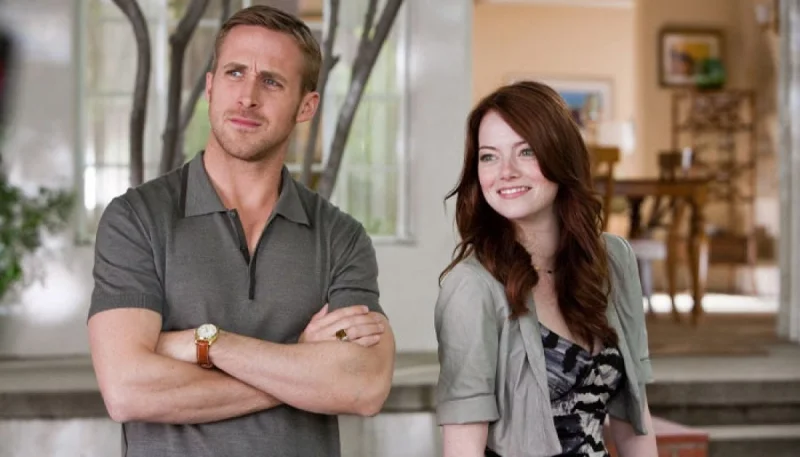
John Requa remembers telling Kevin Bacon that the set of Crazy, Stupid, Love might be in trouble because everyone was having too much fun. Bacon did not buy it. “Nah, it’s not true. Don’t believe that,” he told the directors while they were filming the backyard scene at the end of the movie.
The recollection is landing now because Crazy, Stupid, Love is marking its 15th anniversary, and the movie has long outlasted the easy label of a 2011 comedy. It paired Steve Carell as Cal, a newly separated middle-aged man, with Ryan Gosling as the smooth talker who teaches him how to move through the dating world, while Emma Stone, Julianne Moore and Bacon filled out the cast.
Requa said the concern came during a five-day stretch shooting the backyard scene, when he and Glen Ficarra were watching the cast and crew loosen up around a script that was already playing well. He recalled telling Bacon, “Kevin, we’re worried we’re having too much fun.” Bacon’s answer calmed them down, because the directors said the atmosphere on set was exactly what they feared might disappear in the cut: everybody got along, and there was a lot of improv and goofing around.

Ficarra said the process was partly disciplined and partly freewheeling. They shot the script, then played with scenes alongside the actors. Not all of that survived. Ficarra said a lot of the improv did not make it into the movie, though they kept what he called “the cream” of it, trimming the rest to keep the film under two hours. In other words, the looseness on set became useful only after the edit separated the good instincts from the excess.
That split matters because Crazy, Stupid, Love became a commercial success, grossing $145.1 million worldwide against a $50 million budget. Bacon played David Lindhagen, the affair partner whose relationship with Julianne Moore’s Emily sets her on the path to divorce from Cal, giving the movie one of the turns that made the ensemble work. The final shape of the film, the directors’ memory suggests, was not built on neat planning alone. It was built on a set where the cast had enough freedom to wander, and enough discipline to leave some of that wandering behind.
The anniversary also revived a separate reminder from Steve Carell: he said in March that he never liked the title at first and had expected a different placeholder altogether. But the film’s name, like much of the movie itself, survived because the result worked. What remains unresolved is not whether the comedy found its audience. It did. The unanswered piece is how much of that backyard looseness never made the final cut, and how much of the movie’s charm came from the material the editors chose to leave out.
