


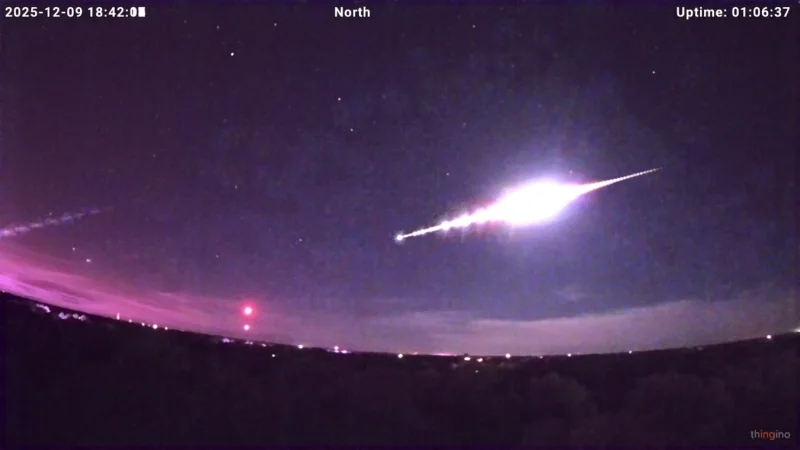
The kappa Cygnids are in play now, and the American Meteor Society says the shower will stay active from July 23 to August 27 before reaching maximum on August 14. For anyone checking upcoming meteor showers this week, that gives a clear window to watch and a single date when activity should be strongest.
The timing matters because this is one of the few showers with a defined peak in the middle of a longer run, and the forecast gives observers something more useful than a general summer sky note. The radiant is currently near 18:12 +39 in eastern Hercules, about 5 degrees west of Vega, and the listed rates are tied to Saturday night and Sunday morning, July 25/26. That is why the search is happening now: the shower is active, the peak is fixed, and the numbers are current enough to plan around.

For dark-sky observers, the estimate is modest. Evening viewing this weekend is expected to produce total hourly rates of about 3 from mid-northern latitudes and near 3 from tropical southern locations, while morning observers may see rates near 18 and 15. Those figures are not city-sky promises. They are estimates based on dark-sky sites away from urban light sources, and observers in urban areas should expect less activity.
Moonlight is the catch. During this period, the moon reaches full phase on Wednesday July 29 and sits opposite the sun, high above the horizon for most of the night. This weekend it will set early enough to leave a couple of hours of dark sky viewing, but early morning and evening rates are still reduced by the bright sky. In other words, the shower is active all week, yet the best chances are concentrated into a short dark window rather than spread evenly across the night.
That leaves the August 14 peak as the date to circle, but not as a guarantee of dramatic fireworks. The better answer is narrower and more practical: the kappa Cygnids are already active, the weekend offers only limited dark time, and the strongest viewing should come from darker sites when the moon is least disruptive. For anyone waiting on the next step, it is the same one the calendar has already set — August 14, when the shower reaches maximum.
