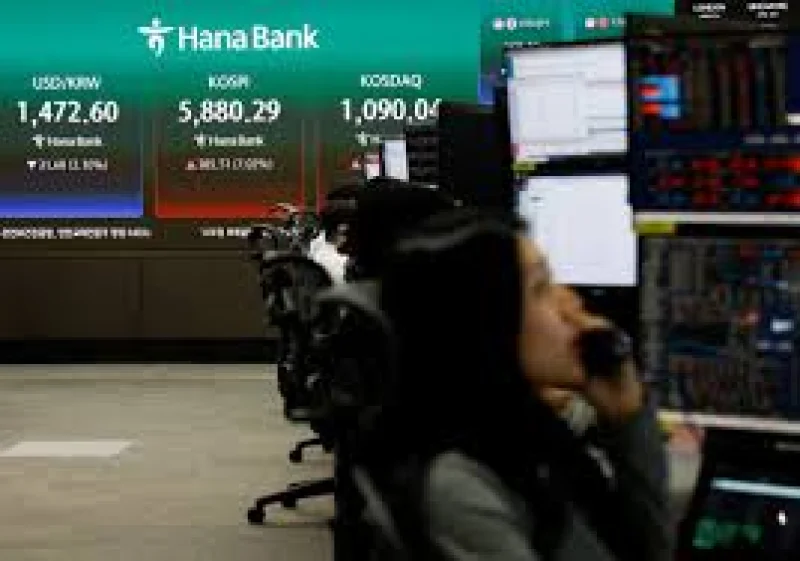
Paul Krugman said Korea’s KOSPI index is looking less like a market and more like a verdict on the AI boom. After a recent drop, he argued that the move reads as a real crisis of faith in the spending spree that has powered AI and AI-related companies.
Krugman’s point matters now because the Korean Stock Market has become one of the clearest gauges of whether investors still believe the massive capital outlays behind AI will pay off. Korea’s semiconductor concentration makes its main index unusually sensitive to that bet, and he said the slide suggests confidence is weakening just as investors are trying to separate remarkable technology from attractive returns.
The setup is simple enough, even if the money involved is not. Krugman said the technology everyone calls AI is remarkable, and he illustrated the point with a post in which Claude identified a blurry image as a tuxedo cat asleep on a patchwork quilt. But he also said amazing technologies do not automatically produce big returns for investors. In his view, the huge spending by AI and AI-related companies only makes sense if AI delivers major economic payoffs and the first movers keep enough of them.

That is where the worry comes in. Krugman said Chinese companies with lighter-weight models could undercut those returns by selling products that are cheaper and almost as good. He also said so much of the AI investment boom has gone to imported equipment, which means the payoff problem is not just about one company or one stock market. It is about whether a wave of spending, much of it tied to semiconductors, can be justified after the easy enthusiasm fades.
He framed the KOSPI move as more than a routine pullback. The index, in his telling, has become a barometer for expectations about AI capital expenditure, and the chart looks like a real crisis of faith. The message is not that AI has stopped being impressive. It is that investors are being forced to ask whether the bill for building it will ever come back in profits.
Krugman reached for an older story to make the point. He wrote that Lord Grantham bet on the wrong railroad and lost his wife’s fortune, a reminder that revolutions can be real without making every investor whole. Railroads changed the world, he said, but it was hard to tell in real time how that revolution would shake out. The same uncertainty now hangs over AI, with early euphoria giving way to a harsher reckoning over who captures the gains and who gets left holding the costs.
Krugman said the KOSPI move does not point to a U.S. recession, which narrows the warning. Even so, the market signal from Korea suggests the question is no longer whether AI is transformative. It is whether the scale of the spending can still be defended if the returns are competed away before investors can claim them.