


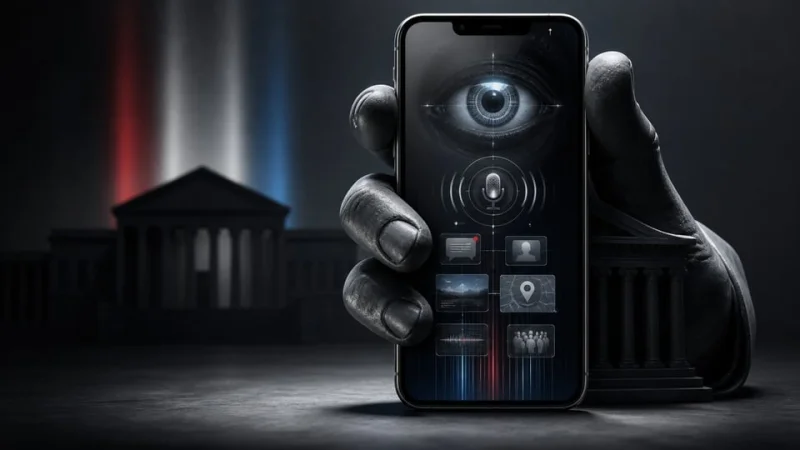
Sen. Gary Peters is demanding that U.S. Immigration and Customs Enforcement explain why it bought Graphite, a commercial spyware tool he says could covertly take control of phones and collect messages, photos and location data. He gave the agency until Aug. 7 to turn over documents and answer questions about how the software is being used.
The July 23 letter to Homeland Security Secretary Markwayne Mullin centers on ICE's $2 million, sole-source purchase of Graphite, a tool developed by Paragon Solutions and now owned by REDLattice. Peters called it one of the most significant expansions of DHS and ICE's surveillance ambitions to date, and he said misuse is not hypothetical after public reporting showed more than 90 journalists and civil society members were targeted by the technology across several countries.
Peters is the ranking member of the Senate Homeland Security and Governmental Affairs Committee, which puts him in a position to press ICE on a purchase that has not been fully explained. His questions go to the heart of what a domestic law enforcement agency can do with a tool built to work silently on a phone and pull out personal information without the owner knowing it is there.

He wants to know whether Graphite has been deployed domestically, who has been targeted, what legal authority supports its use and how many U.S. and non-U.S. people may have been affected. He also asked for information on whether the data collected by Graphite has been shared with other government agencies, companies or nonprofit organizations, along with contracts, privacy assessments, civil rights reviews, security policies and records tied to a September 2024 agreement, an October 2024 stop-work order and the contract's reactivation in August 2025.
The unanswered part is what ICE has actually done with the software. Peters did not accuse the agency of using Graphite against journalists, protesters or other Americans, but he said he is deeply troubled about how it might be used in the United States to target Americans. That concern sharpened after his committee staff asked for briefings from DHS in December 2025 and from ICE in January 2026 and, he said, never heard back substantively.
A senior DHS official told CBS News that the department and ICE are employing various forms of technology in support of investigations and law enforcement activities while respecting civil liberties and privacy interests. That answer does not resolve the core question Peters is pressing now: whether a surveillance tool associated with abuse abroad has crossed into domestic use, and if so, under what rules. ICE must decide whether to answer that question by Aug. 7, or leave Congress to draw its own conclusions from the records it receives, or does not.
