


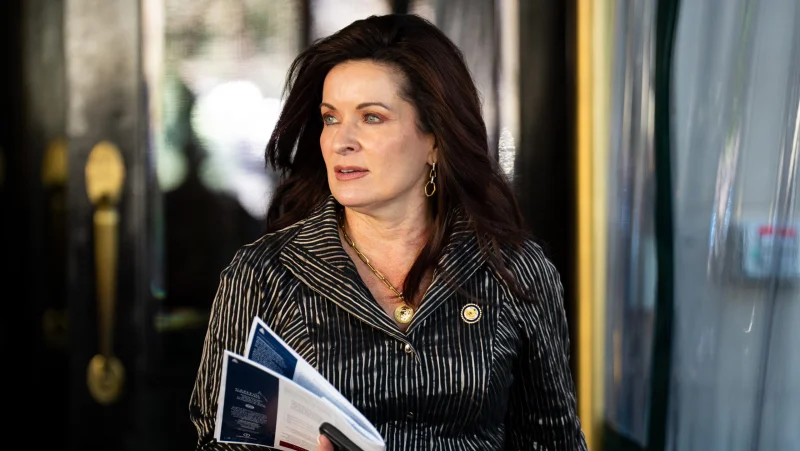
Rep. Sheri Biggs led a bipartisan push on fighter procurement, asking congressional defense leaders to use the fiscal 2027 defense bills to buy no fewer than 72 fighters a year and to keep at least 57 combat-coded fighter squadrons in the force. The letter lands as the Air Force’s own budget request would buy 62 fighters, leaving lawmakers to decide whether to widen the gap or start closing it.
Biggs said the current demand signal for US air power abroad is not sustainable without significantly growing the force. That argument is drawing attention now because the Air Force fighter fleet is already the oldest and smallest in the service’s 78-year history, and its primary mission fighter aircraft inventory has fallen below the congressionally mandated floor of 1,145 aircraft.

The letter was signed by Biggs and Representatives Don Bacon, Donald Davis, Russell Fry, Clay Higgins, Dusty Johnson, Nancy Mace, Ralph Norman, August Pfluger, Pete Stauber, Chris Smith, William Timmons and Joe Wilson. It urges Congress not only to hold procurement at no fewer than 72 fighters per year, but to scale it above 100 as industry allows, support multiyear procurement authority for the F-35A and F-15EX, and require better reporting on fighter recapitalization across the Active, Guard and Reserve components.
That demand runs into the same math the Air Force is already living with. The service’s fiscal 2027 request includes 38 F-35As and 24 F-15EXs, but legacy fighter aircraft have been divested at roughly a two-to-one ratio compared with the procurement of new fighters. Even if some older aircraft must leave because they are more expensive to sustain and less useful against advanced threats, retiring them before replacements are fielded changes the size of the force. A 62-jet buy can slow that slide, but it does not stop it; 72 buys would narrow the loss, and anything above that would begin to rebuild inventory instead of merely managing decline.
The bigger issue is that the force is not shrinking in a straight line by accident; it is being shaped by a procurement pace that trails divestment and by a fleet projected to reach its lowest point in fiscal year 2028. Congress now has to decide whether to accept that trajectory or put a higher floor in law when it writes the FY27 defense bills. If it does not, the Air Force will keep retiring more fighters than it replaces, and the gap Biggs is warning about will only get wider.
