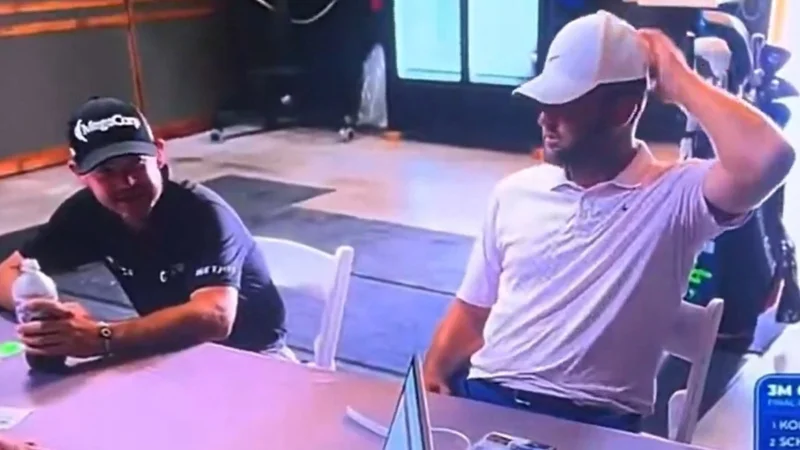
Brian Harman turned a routine scorecard stop into the most replayed moment of the 3M Open on July 26, 2026, when he looked into a TV camera and raised his middle finger after finishing play. Scottie Scheffler, standing nearby, laughed immediately and pumped his fist.
The gesture came after Harman and Scheffler had wrapped up the final round at TPC Twin Cities in Minnesota and gone to the scoring area to sign their scorecards, one of golf’s most ordinary post-round tasks. That is what made the clip travel so fast: nothing about the setting suggested a flashpoint, yet the camera caught a brief, unmistakable act of defiance in a place built for routine.
Scheffler’s reaction mattered because he was not just any player in the frame. He shot a bogey-free 8-under 63 to finish solo second at 22 under, while Harman carded a final-round 65 to finish tied for third at 20 under. Both trailed Jackson Koivun, who won the 3M Open with a tournament-record 25 under and collected his first PGA Tour victory in his third start as a professional.
The moment sits in the middle of a bigger story about how golf’s tightest conventions can make the smallest breach feel outsized. A scorecard signing is supposed to be invisible, a quick administrative finish before players move on. Instead, a TV camera found Harman staring straight into the lens and making a gesture that needed no explanation, and Scheffler’s laughter made clear that the exchange landed as a joke as much as a snub.
What remains unanswered is why Harman did it. No official reaction was part of the scene, and nothing in the post-round routine explained the gesture on its own. For now, the lasting image from TPC Twin Cities is not the winning score or even Scheffler’s runner-up round, but Harman’s split-second decision to turn a standard closing formality into the kind of clip that outlives the leaderboard.