


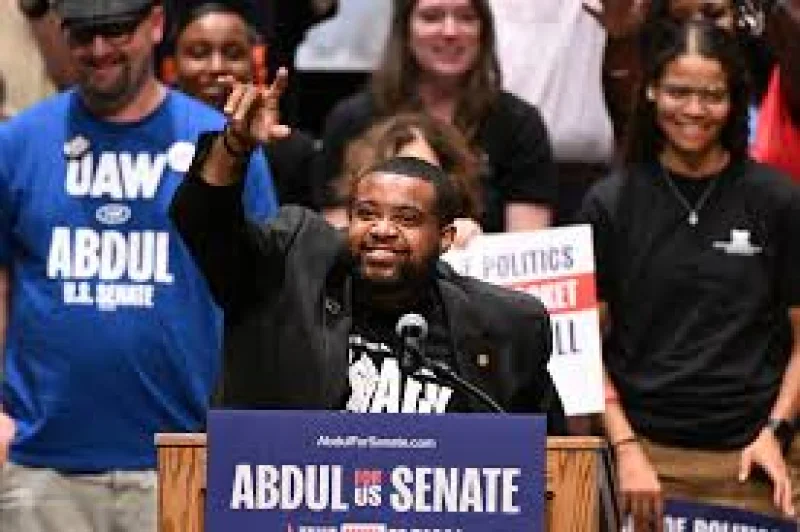
Donavan McKinney has jumped into the Aug. 4 Democratic primary in Michigan's 13th Congressional district, putting himself directly against Shri Thanedar in a race that could decide who speaks for most of Detroit in Washington, D.C. The challenge is aimed at a self-funded incumbent who won the seat in 2022 and is now trying to hold off a challenger making representation itself the argument.
The race matters now because Detroit-area Democrats are choosing between two candidates who are running as anti-Trump progressives and who share much of the same policy language. Both back universal health care, want to eliminate U.S. Immigration and Customs Enforcement, and support ending the war in Iran. That leaves personality, money and the meaning of the seat as the real dividing lines, and McKinney has tried to make the contest about whether the district is being put first.
Thanedar enters with the edge insiders expect in a crowded city race: funding and name recognition. He is a two-term U.S. Rep. who can spend his own money, and political hands describe the district as his to lose. The winner of the primary is likely to take the seat in November, which means the Aug. 4 vote is not just about a nomination but about who is most likely to keep the district in Democratic hands.

McKinney is trying to close that gap with a message tied to race and local pride. He has the backing of Bernie Sanders and Rashida Tlaib, and he and Abdul El-Sayed have cross-endorsed each other. He also argues that Thanedar has not done enough for the district, saying he has left it out to dry, while Thanedar says he has delivered for constituents and deserves another term. That split goes to the heart of the campaign: one side says the incumbent has worked for the district, the other says he has not.
The history behind that argument still hangs over the race. Thanedar won in 2022 after surviving a nine-way primary that included multiple Black candidates, and his election marked the first time since 1955 that the majority-Black city did not have a Black lawmaker representing it in Congress. McKinney is campaigning to reverse that result, casting Detroit as the Blackest major city in all America and saying voters want that representation returned.
That is why this primary has drawn the kind of attention that usually follows a rare opening. Joe Tate says he does not know which way the race will go right now, and Mario Morrow calls unseating Thanedar a huge upset. Both descriptions fit the same reality: McKinney has a credible opening in a district where Democrats dominate, but he is still trying to overcome a well-financed incumbent with an established name. The question now is whether his case about representation is strong enough to turn a long-shot challenge into a primary upset on Aug. 4.
