


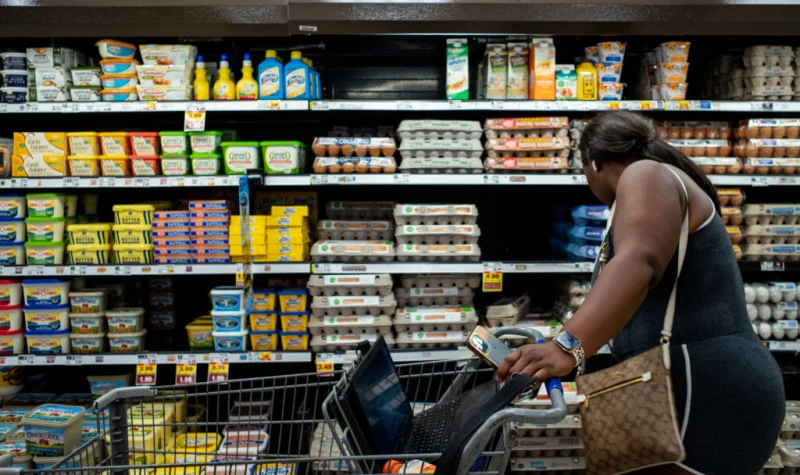
Federal health officials said Friday that 98 people in 17 states have been sickened in a salmonella outbreak tied to recalled eggs, a count that now puts the recall squarely back on the public-health radar. Twenty-six people have been hospitalized, and no deaths have been reported.
The update gives the outbreak its clearest scale yet. Illnesses began between Nov. 21 and June 30, showing the problem has been unfolding for months, not days. Consumers who bought eggs during that stretch are being told to check their refrigerators and get rid of any recalled eggs or take them back for a refund.
Investigators identified shell eggs recalled by Midwest Poultry Services as a likely source of the germ. Midwest Poultry previously recalled eggs produced and distributed from farms in Texas between June 6 and July 3, and those eggs were sold under several brand names with sell-by or best-by dates from July 20 through Aug. 17. The dates matter because they cover the window in which many shoppers would still have the eggs at home, long after the recall notice first went out.

The eggs reached store shelves in more than one chain. Kroger stores in Texas and Louisiana received the recalled eggs, and Brookshire Grocery stores in Texas, Oklahoma, Arkansas, Louisiana, New Mexico and Mississippi did as well. That wider distribution helps explain why the outbreak crosses so many states and why the warning now reaches beyond the farms where the problem was first detected.
There is still a gap in the picture. The FDA said Midwest Poultry Services is a likely source, but the company does not account for all of the illnesses. Samples collected by Midwest Poultry at farms in Texas tested positive for salmonella, and genetic testing showed that some samples match the bacteria strain that sickened people, but the outbreak total is larger than the illnesses tied to that source alone. That leaves open the question of whether more than one contaminated lot, or more than one path through the distribution chain, helped spread the bacteria.
For now, the safest step is the simplest one: check the carton, check the dates, and do not eat eggs that match the recall. The count is already close to 100, and the list of affected states is broad enough that many households could have the product without realizing it.
