


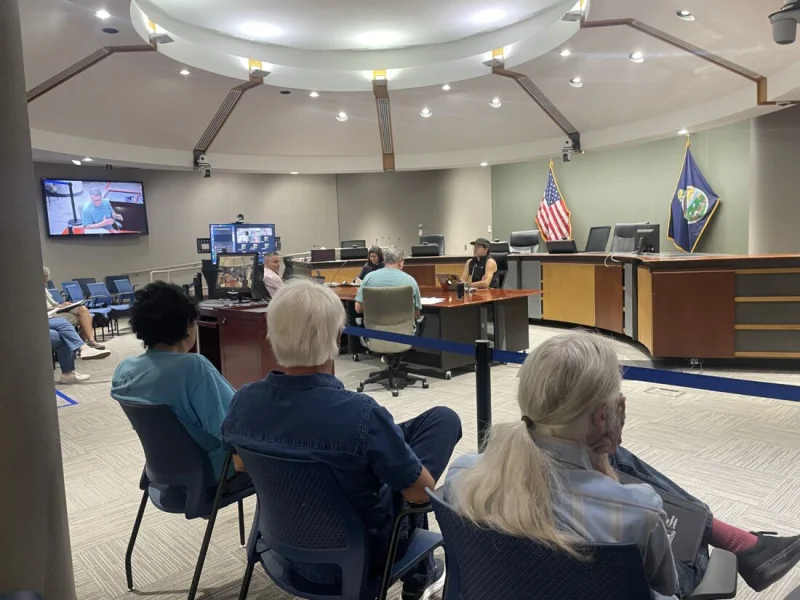
Lawrence’s Environmental Sustainability Advisory Board wants environmental sustainability written into the city’s next strategic plan as more than a side note. Meeting Thursday night, July 23, 2026, the board talked through the environmental policies and projects it may send to the City Commission, with Chair Nancy Muma urging members to treat sustainability as an underpinning for the city’s goals, plans and performance metrics.
The timing matters because the city is heading toward a strategic plan restructuring with a new commission in September. That plan is not just a list of aspirations; it is the document that sets city goals and defines how progress gets measured. Sustainability Director Kathy Richardson said the previous five-year strategic plan already named environmental sustainability as one of the city’s commitments, but the board is now trying to turn that commitment into something more durable before the rewrite begins.
Muma argued for a two-phase approach. First, the board should identify priorities now. Then it should feed those ideas into the strategic plan process so sustainability is built into the framework rather than added later. She told the group, “I think it’s really important that we do it in two phases,” and added that the goal is to “make sure that we can get environmental sustainability as a underpinning of many of the goals and plans and (performance metrics).”

Patrick Ross came to the meeting with a 460-page Environmental Policy and Initiative Compendium, a document that tries to do exactly what the board is searching for: gather ideas in one place instead of sending up one proposal at a time. He said he had seen “a lack of environmental stewardship and care” in other parts of city government, even as the board works to strengthen the planning process from inside. Ross said Mayor Brad Finkeldei told the board in March that decision-makers would appreciate a list of environmental policy ideas, and he said he took that advice seriously. “When he asked, ‘What is everything we can possibly do?’ I tried my best to come up with a list in that totality of ideas,” Ross said.
The compendium is wide-ranging, but it also points to a few short-term targets that could show whether the board is moving beyond broad language. Among the ideas are an environmental data dashboard, a new noxious weeds and native plants ordinance, and more solar panels on city buildings. It also includes a regional passenger rail link between Topeka, Lawrence and Kansas City, along with a long-term goal of making Lawrence energy-positive, meaning a community that produces more clean energy than it consumes.
One part of Ross’s proposal tries to give the plan a measuring stick. He says a state of the environment report should be an annual benchmark for the city’s environmental goals and go before the board and the city and county commissions each year. The report could include data on pollution and per-capita electricity use, giving officials a way to check whether the city’s commitments are showing up in actual numbers rather than just policy language.
That is also where the friction sits. The board is trying to place sustainability inside the city’s planning machinery, but Ross’s criticism suggests the rest of city government has not always matched that ambition. The board has not formally acted on his compendium yet, which leaves the biggest question hanging: which of these ideas will make it into a recommendation to the City Commission, and which will remain part of a 460-page wish list when the September restructuring begins.
