


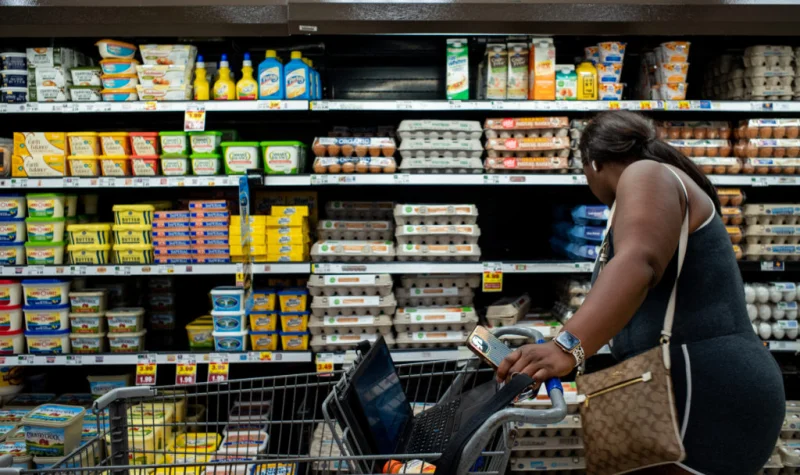
Federal health officials said 98 people in 17 states have been sickened in a salmonella outbreak tied to recalled eggs, turning an already broad food safety problem into a nationwide consumer warning. Twenty-six people have been hospitalized, and no deaths have been reported.
The U.S. Food and Drug Administration said the illnesses began between Nov. 21 and June 30, a long spread that suggests the contaminated eggs reached kitchens over months before the scope became clear. Consumers who still have the eggs are being told to throw them away or return them to stores for a refund.
Investigators identified shell eggs recalled by Midwest Poultry Services as a likely source of the germ. Midwest Poultry previously pulled eggs produced and distributed from farms in Texas between June 6 and July 3, and samples collected by the company at farms in Texas tested positive for salmonella. Genetic testing showed that some of those samples match the bacteria strain that sickened people, which is why the recall has become the focus of the outbreak response.

The recalled eggs were sold under several brand names and had sell-by or best-by dates between July 20 and Aug. 17. Kroger stores in Texas and Louisiana received some of the eggs, and Brookshire Grocery stores in Texas, Oklahoma, Arkansas, Louisiana, New Mexico and Mississippi received some of them, widening the number of shoppers who may need to check their refrigerators.
That wider distribution also explains the part of the case that still does not fit neatly. Midwest Poultry eggs are the likely source, but they do not account for all of the illnesses, so health investigators are still working through how the outbreak spread and whether every sick person was exposed in the same way.
For consumers, the advice is simple and immediate: check any eggs against the recall, discard them or take them back for a refund. Symptoms of salmonella poisoning include diarrhea, fever, severe vomiting, dehydration and stomach cramps, and while most people recover within a week, infections can be severe in young children, older adults and people with weakened immune systems. The key question now is not whether the recall matters, but how many households still have the eggs sitting in a carton after months of sales across 17 states.
